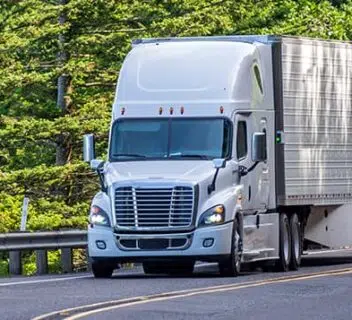
In Pursuit of Compensation: Why You Need an Experienced 18 Wheeler Accident Law Firm

If you’ve been injured in an accident with a trailer truck or some other large commercial truck, then you may be dealing with serious losses — personal, career, lifestyle, medical bills, etc.  Our law firm is committed to assisting truck accident victims in their pursuit of compensation, ensuring they understand their rights and the legal avenues available for recovering their losses. We encourage you to get in touch with an experienced truck accident law firm to get started.

Before you call us, perhaps you’d like to understand some basic legal and strategy issues associated with truck accident claims and related disputes.  Let’s explore!

Large commercial truck accidents are uniquely dangerous

Trailer trucks — and other large, commercial vehicles and trucks — are uniquely dangerous in the auto accident context.

Why?

Consider the following issues:

  • Eighteen-wheelers and other large commercial trucks are extremely heavy.  This increased mass means that when they collide with other vehicles, the force of impact is often enough to cause severe injury or even death.
  • Eighteen-wheelers and other large commercial trucks can be unwieldy and difficult to maneuver on the roadways.  This can easily lead to accidents when there is not enough space on the road to allow for safe turning.  They also require a great deal of room to come to a complete stop.
  • Cargo loading can be improper, leading to one side of the truck being overloaded compared to the other.  This causes balance issues, which can give rise to serious and unexpected accidents.

Truck accidents are more common, and when they occur, they tend to lead to catastrophic injuries with very serious life impacts.  As such, it’s critical that you work with a skilled truck accident attorney who can help you explore your options and secure the maximum possible compensation. It’s also essential to preserve evidence from the accident scene to support your legal claims, highlighting the importance of documenting the scene, gathering information, and collecting contact information from witnesses.

Truck drivers have a heightened responsibility to others

Commercial truckers have a heightened responsibility on the roadways.  Though all drivers of motor vehicles have a duty of care to avoid unreasonably causing harm, truckers have to get commercial licenses.  This emphasizes their heightened duty of care to others — which makes sense, after all, in commercial vehicle accidents, given that they’re operating dangerous machinery at a high speed, on public roadways.

With this heightened duty of care, it tends to be “easier” to establish that a truck driver was negligent (and therefore liable).

For example, if a truck driver did not ensure that there was ample room to turn a corner, then they could more easily be found liable due to their heightened responsibility.  By contrast, it would be a more complicated and back-and-forth argument in a dispute involving a regular driver. 

What is the number one cause of trucking accidents?

Driver fatigue is the number one cause of trucking accidents in the United States.  This has a number of implications for your lawsuit, as driver fatigue isn’t always just the trucker’s personal fault in car accidents (even though they are partly responsible for their own fatigue and not taking steps to avoid driving while fatigued).

In America, the trucking industry has long had issues with scheduling.  Many industry critics have argued that the trucking industry contributes to driver fatigue by assigning truck companies to overly difficult routes, overscheduling truckers, and offering pay incentives that pressure truckers to drive for as long as possible without stopping.

Assuming that you work with an experienced truck accident law firm, their attorneys will be able to investigate the facts of your case and determine whether the trucking company contributed to driver fatigue (or any other issues) through their work policies.

Multiple defendants may be liable for your injuries

In a truck accident dispute, the trucker who hit you may not be the “only” truck accident claim defendant worth suing.  There could be a truck accident case with many liable parties, in fact, multiple parties.  This may include, but is not limited to:

  • The truck driver
  • The trucking company that employed the truck driver
  • Other drivers on the road
  • The business that loaded the cargo
  • The business that maintained the truck
  • The City
  • Other property owners
  • And more

Phew, that’s quite a bit!  Not every case is going to involve all these defendants, but the potential is certainly there.

For example, after investigating your case further, your attorney might discover (with the help of an accident reconstruction expert) that the semi trucks’ truck crashed into you because it was improperly loaded with cargo.  This could give you an opening to sue the warehouse whose workers loaded the semi-truck accident cargo incorrectly.

Damages can be varied and significant

Damages in a truck accident vary from case to case.  Depending on the circumstances of the crash involving the accident victims and your case, you could have anything from a relatively minor claim to a major lawsuit worth hundreds of thousands of dollars.

Damages cover losses that may include the following:

  • Wage loss
  • Loss of earning capacity
  • Medical expenses
  • Property loss
  • Pain and suffering
  • Loss of enjoyment of life
  • Loss of companionship
  • And more

Consider, for example, an accident involving a large commercial truck.  In Scenario A, you somehow escape from the wreck mostly unscathed, with only minor injuries.  In Scenario B, you sustain critical injuries, forcing you to undergo expensive surgery and years of painful rehabilitation.  Your medical expenses and pain and suffering claims (in Scenario B) are likely to be substantial — likely rising into the hundreds of thousands of dollars, at least. 

Given the potential range of damages for truck accident injuries (and the importance of developing a sound legal argument that supports your damages claim), you should work with an experienced truck accident lawyer if you’ve been in a truck crash.

The vast majority of claims have a deadline known as the statute of limitations.  If you do not bring your claims (i.e., file them with the court) before the deadline passes, then you’ll have relinquished your claims under the law.  Courts will dismiss your claims if you attempt to litigate them after the deadline has passed.

For example, in California, the statute of limitations for a standard negligence-based personal injury claim is two years from the date of injury.  You could lose your legal right to be compensated if you don’t begin the litigation process in that two-year timespan!  And in the wake of an accident, when you’re trying to recover from the severe injuries and get your life back on track, time can pass very quickly.

That’s why it’s so important to consult an attorney early on.  They have a professional duty to act in a timely manner when handling your claims.  Further, by having them work on your case, you’ll free yourself up to focus on recovering and managing your injuries, career, and personal life post-accident.

It’s worth noting that — even if you delay too long — there are some legal exceptions that could apply to your claim, giving you more time to litigate. For example, there’s a legal principle known as the “discovery rule” that doesn’t start the clock on the deadline countdown until you discover your injury. If you reasonably could not have discovered your injury until a later date (i.e., the car accident causes you to sustain a degenerative condition, the symptoms of which don’t appear until years later), then you’ll be able to litigate within two years of the date of discovery.

Many trucking companies and accident injury victims worry that they can’t sue because they don’t have any money to litigate.  This concern is borne out of a misconception of how personal injury litigation works.

Because in all likelihood, you won’t have to pay anything out-of-pocket to litigate your claims.

See, plaintiffs attorneys — which includes truck accident lawyers who fight to secure compensation on your behalf — generally work on a contingency fee basis.  This has many different advantages.

But how do contingency fee arrangements work?

In a contingency fee arrangement, an attorney agrees to represent your legal interests at no upfront or out-of-pocket cost.  Instead, they agree to take a percentage cut of the compensation they secure on your behalf — this can vary anywhere from 25 percent to 40 percent or more.  Here’s the thing: you only pay the attorney their “cut” if you win compensation.  If you don’t get paid, they don’t get paid.

This is an enormous advantage, as it allows most people (even those who don’t have any funds) to litigate their claims.  Contingency fees also incentivize attorneys to work efficiently and effectively to maximize the client’s compensation — after all, they get paid more when you get paid more.

If you’ve been injured in an accident with a large commercial truck, then you could be entitled to compensation for your losses — and these losses are likely to be substantial, given that large truck accidents often have serious injuries and lead to severe and life-changing injuries.  Given the high-stakes nature of truck accident cases and the personal injury claims in your dispute, you’ll want to work with an experienced personal injury attorney who knows how to best position you for success.

Contact 1-800-THE-LAW2 to connect to a qualified truck accident attorney in our legal network in just 10 minutes or less.  They’ll be able to provide a free initial consultation, during which you’ll have the opportunity to discuss your truck accident lawsuit case in more detail.  You’ll also be given guidance on your next steps and strategic options.  That being said, if you decide that you’d rather not move forward, you’re under no obligation to do so — the free consultation has no strings attached at all.

So what are you waiting for?  Call in today to have your case evaluated.

In a Car Accident With No Insurance? This Could Impact Your Claim

If you’ve been involved in an accident without insurance, either as the uninsured party or the victim of one, the situation can quickly become complex and daunting. You’re not only attempting to recover from your injuries but also facing a car accident without insurance, which complicates your pursuit of compensation to cover your losses — and rightfully so. However, an uninsured or underinsured driver may not have the liability coverage necessary to pay out the compensation you need. In many states that require car insurance, driving without it can lead to severe legal and financial consequences, emphasizing the importance of being insured to avoid potential liabilities and penalties.

A lack of car insurance can have many impacts on your claim. Given the complexity, we do encourage you to get in touch with an experienced auto accident attorney who can help navigate these car insurance laws and related challenges. That being said, if you’d like to learn more about the issues and opportunities in an uninsured/underinsured accident dispute, then read on!

Getting into an accident without uninsured motorist coverage: the issue

So, what’s the problem with getting into a car accident with no insurance (i.e., the driver who hit you has no insurance coverage)?  It boils down to one thing: the “capacity” to compensate you for your losses. The defendant’s driver’s insurance or lack of car insurance demonstrates an inability to compensate you. Additionally, driving without insurance can lead to severe legal penalties, including a suspended driver’s license, highlighting the importance of maintaining proper insurance coverage.

Let’s break it down.

If you’re injured in a serious auto accident, then you may suffer many different losses — some minor, some debilitating and life-changing — as a result:

  • Wage loss
  • Loss of earning capacity
  • Medical expenses
  • Property loss
  • Pain and suffering
  • Loss of enjoyment of life
  • Loss of companionship
  • And more

For example, if you’re forced to take six months off from work due to debilitating back injuries after a car collision, then you would likely have a substantial wage loss claim.  You might also have a substantial claim for loss of earning capacity damages if the injuries are likely to impact your ability to work in the future.  These losses can add up very quickly.  It’s not uncommon for an injury dispute centered around an auto accident to give rise to $100,000 (or even more in damages).

The problem with uninsured and underinsured drivers is that they don’t have the financial resources to cover your losses.  Their insurance coverage is inadequate (or nonexistent).  If you suffered $100,000 or more in losses, how could they possibly compensate you?  They have no financial responsibility and no insurance!

Fortunately, you’re not without options in a “no car insurance” dispute.  The driver is not necessarily the only one responsible for your accident.  There may be other defendants, some of whom have substantial coverage with which to pay out.

Finding a deep-pocket defendant

If the defendant is an uninsured driver or underinsured driver, you won’t necessarily be able to secure the compensation you need from them.  That leaves you with a few other strategic options for obtaining compensation — chief among them, identifying and suing other defendants who “do” have adequate insurance coverage.

This strategy is known to many litigators as “finding the deep-pockets defendant.”  In other words, if you can identify and sue a defendant with substantial liability insurance and coverage (who is liable for your injuries), then you can be assured that they have enough financial resources to pay out fully.

Beyond the at-fault driver, potential defendants in your accident dispute may include:

  • The driver’s employer
  • The auto manufacturer
  • The auto repair shop
  • The City
  • Private property owners
  • And more

For example, suppose that you’re injured in a car collision at an intersection in the middle of the day.  It turns out that the driver doesn’t have any insurance coverage.  With the aid of an attorney, you investigate the case further and discover that the driver was working at the time of the accident — in fact, they were conducting door-to-door sales visits for their employer.

Under these circumstances, you’d likely be able to sue their employer (pursuant to a legal principle called vicarious liability).  As a business, the employer would not only be more likely to have sufficient insurance coverage, and legal penalties but would also have an incentive to avoid the negative publicity of a lawsuit — they might therefore be more willing to offer an early and favorable settlement.

Submitting a claim with your own insurer

If your auto insurance policy has UM or UIM coverage (uninsured motorist coverage or underinsured motorist coverage), then you can potentially submit a claim with your own insurance company to get paid out through your policy.  Uninsured motorist coverage is a solid option if it’s available to you through your auto insurance coverage or provider.  That being said, the insurer will not necessarily be willing to pay out the maximum, so you’ll want to “prove” your claims to them with the aid of a qualified attorney.

Car insurance companies are NOT your ally

The general public has often been taught that insurance companies are their allies.  It’s not surprising — insurers spend a lot of money on advertising meant to bolster this image of them as a friendly, allied entity (for example, State Farm’s “Like a Good Neighbor” branding).  In fact, this perception is so ingrained in American society, that many people don’t realize that insurers are actually working in opposition to getting you paid!

Here’s how it all works.

Auto insurance companies make more profit when they can underpay (or even outright reject) claims.  Even if those claims are reasonable or legitimate, insurers are incentivized to do everything possible to weaken the claimant’s argument and thereby avoid paying out.  When you’re talking to an insurance adjuster after your accident, they’re not trying to get you paid the maximum possible amount — their job is to identify any information that they can use to avoid paying too much.

That’s why it’s so dangerous to communicate with insurers until you’ve consulted an experienced car accident attorney.  Your attorney will be able to speak to them on your behalf and help you avoid the many hassles and issues associated with car insurance company disclosures.

Have an attorney engage all communications with insurers

Attorney litigators play a number of different roles — they’re not just meant to play the role that you might see on television (i.e., arguing before a judge in court).  They are also key communicators and advocates outside of court and will speak to insurers on your behalf to advocate for your interests.

Insurers know that they cannot force sensitive, potentially-undermining disclosures out of an attorney.  This means that they will usually be more serious in considering your injury claims and in making a settlement offer.

Given the potential for damaging your case by disclosing sensitive information to an insurance company, it’s critical that you consult with an attorney first before having any detailed discussions about the accident with an insurer.

What do insurance companies use to underpay or reject your claims?

If you’ve been in an accident with an uninsured driver, or whether the driver involved actually has insurance coverage (but it’s insufficient), you may find that your own insurer is all too willing to underpay or reject your attempts to recover compensation. Now, it would be illegal for insurance to outright deny or pay less than what you’re reasonably entitled to under your policy. So they come up with various justifications for taking actions that have negative financial and legal consequences for you.

What are these justifications? Here are a few:

  • Policy exception applies to the claim
  • Insufficient documentation/proof for the claim
  • The claimant was at fault
  • The policy simply doesn’t cover the injury at issue
  • And more

This can be a bit difficult to understand, so let’s go through a quick example.

Suppose that you’re involved in an accident and the other driver (the driver responsible for your injuries and vehicle damage) has no insurance. You decide not to take legal action against the driver at fault for the accident, since there is no reasonable compensation to obtain from engaging the legal process in that regard. Instead, you submit a claim through your own insurance to seek compensation.

Your insurer denies your claim, surprising you. They argue that you are not entitled to benefits as per your policy, since the contract language prohibits you from getting a payout if you were even partially at fault for the accident. They are attempting to paint the car accident as your fault, pointing to the fact that you were distracted at the time of the accident by your phone.

This is where an attorney is helpful. Your attorney would be able to argue that — while you were using a phone — you had it on speakerphone and placed in a holder. Thus, it was no different than if you were speaking to a passenger in your own vehicle. These back-and-forth arguments are part of the insurance claim process, too, so don’t just rush to submit your benefits claim. Car accidents can be complex. Work with a qualified attorney.

Using an attorney for your car accident dispute doesn’t have to cost anything

Most plaintiffs’-side accident attorneys don’t just offer free consultations — they also work on contingency.  Contingency fee arrangements make legal representation easy and accessible for everyone.  How does it work?

When an attorney represents you on contingency, you don’t have to pay them anything upfront or out-of-pocket.  That’s right — it costs you nothing to get started with your case.  Instead, you agree to pay the attorney a “percentage cut” of the compensation they secure on your behalf.  You only pay this percentage cut if they’re able to successfully obtain compensation for you.  If not, then you don’t pay anything.

This creates a powerful incentive for attorneys to work effectively and efficiently to maximize your compensation.  The more you get paid, the more they get paid.  Note: percentage fees for contingency arrangements vary from attorney to attorney.  They can go as low as 25 percent, and up to 40 percent or more.  Before you hire an attorney, you should make sure to discuss the details of this percentage cut.

If you’ve been injured in a car accident with no insurance (i.e., the other driver is uninsured or underinsured), then you may be feeling lost and confused about what options you have for recovery.  That’s entirely reasonable.  Accidents involving uninsured drivers lead to serious medical bills and significant strategic challenges — but there may still be legal opportunities for you to secure compensation.  That’s why it’s so important to consult with an experienced car accident attorney for guidance.

Contact 1-800-THE-LAW2 to get connected to a qualified attorney in your area in just 10 minutes or less.  Our network attorney will be able to provide a free legal consultation.  During this initial consultation, you’ll have the opportunity to discuss your case in detail and learn about the next steps.  If you decide against moving forward, that’s okay — there’s no obligation for you to continue.  So call in and have your case evaluated!

We look forward to assisting you.

Aftermath of a Minor Car Accident: Seeking Compensation

Injured in a minor car accident?  Not every car accident is severe and shocking — but even minor accidents or a low-speed collision could lead to a cascade of issues.  Whether or not you think the accident led to significant losses, it’s crucial to promptly contact your insurance carrier to report the accident for documentation and claims purposes. It’s worth talking to an experienced accident attorney for an evaluation of your case and a better understanding of your legal options.

If you’d like to learn more about minor car accidents, and the basic legal issues associated with these sorts of disputes, read on!  We’ll briefly explore and explain these issues so that you have clarity as you move forward with your case.

Minor car accidents can lead to major injuries — don’t make assumptions about your case too early

Minor car accidents are not always as straightforward or as simple as one might assume.  A minor car accident can very well give rise to severe injuries/conditions, including traumatic brain injuries, even if it is not immediately apparent or obvious at first glance.

For example, suppose that you’re in a low-speed rear-end collision with another driver, at a red light.  It’s a minor collision and — beyond some light neck stiffness — you don’t believe you’ve suffered any serious injuries.  Two years later, you suddenly start to experience severe stiffness and pain in your neck.

Your doctor runs a battery of tests and discovers that the low-speed collision accelerated the development of a condition that you already had: spinal degeneration.  This has led to daily, severe neck stiffness and pain, now.  Under these circumstances, you would be able to potentially sue and recover substantial damages from the insurance company and defendant-driver, even though they were going relatively slow when they hit you.

Cases like this are quite common in the personal or bodily injury claim context.  That’s why it’s so important that you don’t assume too much about your case.  A comprehensive investigation — including a medical assessment — has to be done before you “decide” that your car accident was not severe.

What to do in the aftermath of an accident

In the aftermath of an auto accident, there are several steps you should take to ensure that you maximize your case potential — if you want to pursue compensation for your losses.

  • Seek medical attention, if necessary.  If you require emergency care, and you delay in obtaining such care, then the defendant may later argue that your injuries were worsened by the delay — they may therefore try and undermine your claims and avoid having to pay out more damages.
  • Take photos and video at the scene of the accident.  If you do not require emergency care, then you can take photos and video.  This will serve as useful evidence of the accident scene in the immediate aftermath of the collision and can be used to reconstruct the accident.  This can be particularly valuable when you and the defendant have different narratives about how the accident occurred.
  • Obtain the contact information of any eyewitnesses.  Eyewitness accounts will be invaluable for supporting your claims.
  • Obtain the contact information of the other driver involved in the accident.
  • Call law enforcement officers to the accident scene, if they haven’t already arrived.  This will ensure that a police report is written about the accident, giving you important documentary evidence for use later.
  • It is crucial to have a police officer at the scene to write up an accident report for insurance and legal purposes.
  • Avoid speaking to your insurer until you have consulted an attorney.  Insurance adjusters will use the opportunity to try and get you to disclose information that could undermine your claims.  Don’t give an insurance company that opportunity.  Your attorney can speak to insurance adjusters on your behalf.

Potential compensation in a car accident

After a car accident in which someone else caused you to have bodily injuries or suffer losses, you may be entitled to take legal action in order to secure compensation for those losses.  Claimable losses from auto accidents include, but are not limited to:

  • Wage loss
  • Loss of earning capacity
  • Medical expenses
  • Property loss
  • Pain and suffering
  • Loss of enjoyment of life
  • Loss of companionship
  • And more

In a minor accident, you may not have substantial pain and suffering, or other lifestyle impacts, and your wage loss, medical bills, and other expenses might also be limited.  That being said, it’s best not to assume or speculate about your losses too early — sometimes, these losses may be more severe than you anticipated.

And even if those losses are not significant, you are likely to have sustained property loss (i.e., damage to your vehicle) that is also claimable as compensation.

Consulting a car accident lawyer is crucial to protect your rights during the insurance claim process, ensuring a fair outcome by negotiating with the insurance company, investigating the accident, and working towards a fair settlement or filing a lawsuit if necessary.

Statute of limitations deadlines: you don’t have an infinite amount of time

Every case — even those involving minor injuries or car accidents — has a procedural deadline for bringing a legal action.  If you don’t file your claims before the applicable deadline period has passed, then courts will dismiss your claims and you won’t have an opportunity to recover compensation under the law.  These deadlines are established by statute of limitations laws in various jurisdictions.

Statute of limitations deadlines are different from state to state.  In California, for example, you have just two years (from the date of the accident) to bring an action.  That’s not much time, especially if you’ve been focusing on your physical and financial recovery and have not properly considered your legal options.  Time flies when you’re attempting to reconfigure your life after an accident, after all.

Given the high-stakes nature of a lawsuit, and just how important it is that you have the opportunity to pursue compensation after the accident, we encourage you to get in touch with a qualified accident attorney who can help evaluate your insurance claims and push them forward in a timely manner — before the deadlines have passed.

That being said, if you waited too long, don’t give up!  Depending on the circumstances of your accident report your case and medical treatment, there may be legal exceptions you can call upon to extend the normal statute of limitations deadline (for example, your injuries may not have been “discovered” until a later date and require medical treatment).

Does your insurance go up after a claim that is not your fault?

In most states, insurers are prohibited from increasing your insurance rates if you’re involved in an accident that is not your fault.  This is meant to encourage injury victims to seek compensation from their own insurance company or carrier when they are entitled to do so.

That being said, insurers are NOT your allies.

They will do whatever they can to undermine your claims so that they don’t have to pay, or so that they can lowball you cash payment.  Alternatively, they may pay out but then attempt to raise your insurance rates.  How?  The insurer may try to get insurance information to paint you as partially at-fault for the accident, thus getting around the rates-increase prohibition implemented by the states.

For this (and many other reasons), it’s crucial that you consult an attorney who can communicate to insurers on your behalf and advocate for your interests.

It is worth working with an attorney, even in a minor car accident case

As the accident victim, you do not necessarily have a perfect understanding of your own personal injuries, property damage, and losses.  After all, what may have seemed (at first) like a minor car accident could reveal much more severe injuries and more substantial losses.

Given the uncertainty and opportunity inherent to legal compensation for minor car accidents, it’s worth consulting an attorney for strategic assistance in the claims process.  Attorneys work to maximize your compensation — even in a minor car accident dispute.  The potential “increase” in recoverable compensation would likely offset whatever contingency fee percentage they take.

Point of note: most plaintiffs’ injury attorneys work on a contingency fee basis.  They only get paid if you secure compensation.  If you don’t get paid, you don’t have to pay the attorney for their services.  Convenient, right?  And when you do get paid, they take a percentage cut of your compensation.  That means you can bring legal action without paying anything upfront or out-of-pocket, making a lawsuit very accessible for those who do not have the funds to expend.

If you’ve been injured and/or sustained damage to your vehicle in a minor car accident, then you could be entitled to compensation.  This may be through submitting a claim with your own auto insurer, pursuing legal action against the driver who hit you, or by suing other potentially liable defendants.  And while your case may appear “simple” at first, further investigation may reveal more severe injuries, and a more complex liability web of vehicles involved — giving you an opportunity to recover substantial compensation to cover your losses.

Contact 1-800-THE-LAW2 to get connected to an experienced car accident attorney in our legal network.  Our network attorneys provide free legal consultations, during which you’ll have an opportunity to discuss your case in detail and get professional advice on your strategic options and how best to proceed.  If you decide not to move forward, you are under no obligation to do so!  As such, there’s really no downside to picking up the phone and calling in for a free consultation.

Legal Avenues: Semi-Truck Accident Compensation Explained

Semi-trucks are a regular feature of American roadways.  If you’ve been injured in a collision involving a large truck, then you could be entitled to semi-truck accident compensation under the law.  These cases are unique, both with respect to the legal opportunities and the challenges you may face.  As such, it’s important to work with an experienced, truck accident settlement attorney who knows how to navigate the litigation process effectively.

That being said if you’d like to learn more about some of the basics of semi-truck accident compensation, read on!

Semi-truck accidents are Uniquely Dangerous

Semi-trucks are uniquely dangerous.  Not only do they cause a disproportionately large number of accidents, but the accidents they do cause very often lead to severe and life-changing injuries.

  1. Semi-trucks are unwieldy.  This can make it difficult for them to maneuver safely on the roadway, leading to a higher number of accidents.
  2. Semi-trucks are massive and heavy.  As such, the force of impact is substantial when a collision occurs.  This can crumple vehicles and cause severe injury (or even death) upon impact.

Given the severity of injuries that often result from a truck accident, it’s that much more important to pursue your legal options so that you can recover fair compensation for all your losses.

Damages in a semi-truck accident dispute

Damages are meant to compensate you for the losses and property damage you sustained as a result of the truck accident case.  As such, they vary substantially from case to case, as the losses will differ depending on many factors.  In any case, recoverable losses may include the following types:

  • Wage loss
  • Loss of earning capacity
  • Medical expenses (i.e., medical bills)
  • Property loss
  • Pain and suffering
  • Loss of enjoyment of life
  • Loss of companionship
  • And more

Suppose you’re unemployed when you get into a truck accident.  You can’t then claim wage loss damages, as you would not have taken any time off work (and therefore sustained a loss in lost wages) to be compensated for.  By contrast, someone who works a high-paying job — who is forced to take a year off to recover — will likely have a substantial wage loss claim.

What is punitive loss?

Punitive damages are not quite like other forms of damages (i.e., wage loss, medical expenses, etc.), which are intended to “compensate” the injury victim by replacing their losses through financial remuneration.

Instead, punitive damages are intended to “punish” the defendant and discourage others from engaging in similar behavior.  That being said, punitive damages are paid out to the injury victim and do result in a financial windfall.  In that sense, they can be conceived as “bonus” damages.

Punitive damages are therefore worth pursuing in your accident settlements and any case where they may potentially be available.  Courts only award punitive damages at their discretion, however, and that too in cases where the defendant’s behavior is deemed sufficiently egregious or malicious to qualify for the “punishment.”  Given the possibilities and complications, it’s worth consulting your accident attorney for guidance on pursuing punitive damages in your case.

Why are most injury disputes resolved through settlement?

According to many industry observers, nearly 95 percent of injury disputes are resolved through either legal representation or a settlement agreement.  This can surprise many people unfamiliar with the legal process and its challenges.  So, why are the majority of injury disputes concluded through settlement, instead of at trial?

Litigation has several disadvantages for (at least some of) the parties involved:

  • Financially costly
  • Time-demanding
  • Mentally exhausting
  • Uncertain outcome
  • Negative publicity
  • And more

For example, consider how litigation “feels” to a trucking company being sued for discrimination in the workplace.  The business defendant may not only spend a year or more in litigation, paying substantial fees to defend themselves in court, but this will distract their organization from their core business — pulling away key resources.

Further, even if the business defendant were to litigate the case thoroughly, there’s no guarantee that they’d win if they go to court.  And if they’re forced to pay out compensation to the plaintiff, the court may require that they pay more than expected.  This uncertainty is extremely frustrating, especially for a business that is attempting to handle its operations in a predictable, process-driven manner.

Finally, discrimination lawsuits are bad publicity.  Even if the business is “innocent,” the lawsuit itself will be reported on and the general public may draw their negative conclusions regardless of the actual outcome of the case.  This could damage the brand and impact their ability to sell their goods/services.

Given all of this, most defendants (and plaintiffs) would rather negotiate an agreement themselves and avoid the hassle, uncertainty, and challenge of litigation.

How long does an injury claim take to settle?

There’s no one-size-fits-all answer here.  A truck accident injury claim can be settled in a few weeks, or a few months, or it may even take a year or more.  Whether a trucking accident or accident settlement happens early depends on several different factors:

  • Hostility of the defendant
  • How damaging negative publicity would be to the defendant
  • Whether you have sufficient evidence to establish liability and your damages claim
  • How sympathetic you appear as a plaintiff
  • The financial resources of the defendant
  • And more

What happens if you get hit by an uninsured driver in Texas?

If you are hit by a motor vehicle by an uninsured truck driver — in Texas or anywhere else — then you’ll be facing a strategic challenge in your dispute. Commercial truck drivers are not generally uninsured, but let’s examine this possibility.

See, when the truck driver doesn’t have insurance, even if they’re liable for your injuries, you may not be able to secure enough of a payout to cover your losses.  That leaves you in a difficult position.  To secure adequate compensation, you’ll therefore have to explore other options.  You can sue other potentially liable parties, or even submit a claim with your insurer (if you have uninsured motorist coverage on your plan).

Depending on the law firm and facts of the case, your options may include:

  • UIM Coverage
  • Employer of the driver who hit you (trucking company)
  • Auto manufacturer
  • City Government
  • Other drivers who contributed to the accident (in a multi-vehicle scenario)
  • Private property owners whose property contributed to the accident
  • Treating medical professionals if they engaged in malpractice
  • And more

This is known as a “deep pockets” strategy.  You benefit from suing or otherwise involving parties who have sufficient insurance coverage to pay out your losses.  These parties may also be incentivized to avoid the negative publicity of a lawsuit (i.e., an auto manufacturer may not want to have its brand dragged through the mud publicly, and trucking companies might want to avoid the brand damage of their driver being sued for auto accident). They may therefore be more willing to agree to an early, favorable settlement.

Truck accident attorneys usually work on contingency

Truck accident attorneys — like other plaintiffs’-side personal injury attorneys — often work with their clients on a contingency basis.  Contingency fee arrangements create a positive incentive dynamic and also lowers the barrier to entry for bringing a lawsuit.  What exactly does this fee arrangement entail?

In a contingency fee arrangement, the attorney doesn’t take any money upfront.  Instead, they agree to represent your interests in the lawsuit and agree to take a percentage cut of the compensation you ultimately receive.  That being said, they only get paid if and when they successfully secure compensation.  If you don’t receive any compensation from an insurance company for your losses (through a court judgment or a settlement or any other mechanism), then they don’t get paid at all.

You could go through an entire lawsuit without paying a dime.  That levels the playing field for plaintiffs who don’t have sufficient finances to cover an expensive lawsuit!

Further, because your attorney gets paid a percentage fee (which can range anywhere from 25 to 40 percent, or more), they are incentivized to litigate your case efficiently and to try and maximize your compensation.  The more you get paid, the more they get paid, after all.

If you’ve been injured in a semi-truck accident, then you could be entitled to sue for damages as compensation.  Bringing a legal action for damages isn’t always straightforward, however, as the case can transform over time — new facts may be brought to light, and defendants may strategically maneuver through the dispute in unexpected ways.  That’s why it’s so important to work with an experienced semi-truck accident compensation attorney as you move forward.

Contact 1-800-THE-LAW2 to get connected to a local truck accident attorney in just 10 minutes or less.  They’ll provide a free legal consultation, during which you’ll have an opportunity to discuss your case in detail.  Based on these discussions, they’ll be able to give you insights into some of the opportunities and challenges you may face as you pursue litigation, as well as your strategic options and next steps.

There’s no obligation to work with the attorney if you decide against it.  So there’s no downside to picking up the phone and calling in to get started.

We look forward to hearing from you.

Understanding Your Rights: How a Semi-Truck Accident Attorney Can Help You

Have you been injured in an accident involving a large truck?  Commercial vehicles — like semi-trucks — can lead to unique challenges and opportunities in litigation.  Given that you’re likely to have suffered serious injuries in a collision with a semi-truck, your damages are also likely to be substantial.  The high-stakes nature of compensation for commercial truck accidents means that you should absolutely consult with an experienced semi-truck accident attorney for guidance on how best to proceed.

Of course, if you’d like to learn more about truck accident lawsuits, read on, and let’s explore.

Why are truck accidents so serious?

Accidents involving large trucks — like semi-trucks — are uniquely dangerous due to the size and mass of the vehicle involved, among other factors.  There are two categorical risk elements to discuss:

  1. Heightened risk of an accident: large trucks have several issues that make them more likely to get into an accident.  First, they are large and lack easy maneuverability, so their clunky structure creates blind spots and takes up enough physical space that accidents are more likely to occur.  For example, when a semi-truck has to make a sudden turn, its turn radius is so large that it may cut across several lanes simultaneously, exposing other drivers to a heightened collision risk.
  2. More severe accidents: large trucks simply have more mass.  They’re weightier than other vehicles, especially when considering the cargo they’re carrying.  This means that the force of impact will be substantial.  Normal vehicles are not necessarily equipped with the sort of safety features (or structure) that would enable them to protect you in a collision with a large truck.  The force of impact will crumple the structure and damage your body more easily.  This leads to more severe injuries on average.

What percentage of accidents are caused by semi-trucks?

Large trucks (which include massive semi-trucks, large delivery vans, and other large commercial vehicles, etc.) account for roughly six to seven percent of all accidents on American roadways, despite making up an even smaller portion of total traffic.  In other words, large commercial truck accidents comprise a disproportionately greater amount of total accidents than one would expect given the low numbers of commercial trucks on the road.

Compensation in a semi-truck accident dispute

Every case is different, and the compensation you can secure is directly linked to the losses you suffered.  In truck accidents, as with other personal injury disputes, you can be compensated for your losses — nothing more.  Recoverable losses from truck crashes include the following:

  • Wage loss
  • Loss of earning capacity
  • Property loss
  • Medical expenses
  • Pain and suffering
  • Loss of enjoyment of life
  • Loss of companionship
  • And more

To better understand how a damages claim works, let’s consider a brief example.  Suppose that you’re injured in a semi-truck accident.  Your injuries are severe enough that they prevent you from working for an entire year, and — as a construction worker — they cause permanent damage that limits your on-the-job responsibilities in the future.  This prevents you from being assigned to as many projects by your company, limiting your future income.  Your medical bills and expenses (even though they’re covered entirely by your insurance) are substantial, and the pain you feel everyday is quite severe — that’s claimable too.

Tallying some realistic numbers together:

  • Wage loss: $70,000
  • Loss of earning capacity: $200,000
  • Property loss: $15,000
  • Medical expenses: $100,000
  • Pain and suffering: $100,000
  • Total: $485,000

See how quickly it can add up?  That’s why it’s crucial to work with an experienced semi-truck accident attorney who can persuasively develop a damages claim that the court will accept as reasonable.

There may be several “liable parties” in your semi-truck lawsuit

Semi-truck lawsuits can be complex, involving multiple defendants.  This is potentially a good thing — it means you can establish liability across several different parties, and thus secure compensation from various parties.  If the driver doesn’t have adequate insurance coverage, for example, it’s not necessarily a problem, as you are also suing the truck company and other defendants who may have sufficient insurance coverage to pay out your losses.

Every case is different, of course, but potential defendants may include:

  • The truck driver involved in the collision with you
  • The truck driver’s employer
  • The warehouse where the truck driver loaded their goods
  • The repair shop that inspected and maintained the truck
  • The truck manufacturer
  • The City
  • And more

For example, suppose that you’re involved in an accident with an eighteen wheeler.  You sustain serious injuries, and hire an attorney to help you sue the trucking company and defendants for compensation to cover your losses.  The two obvious defendants are the truck driver and his employer.

But after further investigation (using an accident reconstruction expert), your attorney discovers that the crash was caused due to improper loading of goods at the warehouse.  You’d potentially be entitled to sue the warehouse as their employees improperly loaded the goods onto the truck, creating an imbalance that led to the accident.

Don’t rely on your insurer to understand your situation and be your ally

Broadly speaking, the general public has been incorrectly taught to go directly to their insurance company after an accident.  In fact, if you ask most people what to do after an accident, they’d probably tell you (among other things, like getting contact info and securing medical attention) to talk to your insurer about the accident.

This is a huge mistake.  Don’t rely on your insurer to be an ally.

Insurance companies profit from rejecting and/or underpaying claims.  When an insurance adjuster is talking to you after an accident, they’re not trying to get you paid more — their job is to identify things that you’re saying that could be used to deny your claim or lowball your payout.  If they can get away with denying your claim, they’ll have made a substantial profit off of you.

That’s the essential dynamic of the insurance business.

Insurance is good — but you should not be talking to them directly.  Have your attorney talk to them instead.  That way, you won’t make any problematic disclosures that could be used against you.  And your attorney will strongly represent your interests to the insurer, increasing the likelihood that you’ll receive a fair payout.

Unique strategic advantages you have as the injury victim in a semi-truck accident dispute

Large truck accident disputes are similar in some ways to a car accident dispute, but there are several important differences, too.  These can give rise to substantial strategic differences, and in fact, from a legal strategy perspective, you may actually have some unique advantages when litigating a large truck accident case.

Consider the following:

  • Semi-truck drivers must have a commercial license to operate their vehicles legally.  CDLs impose a number of heightened expectations on drivers.  Commercial truck drivers are expected to operate their vehicles in a reasonably safe manner, but this behavioral standard is higher than the standard imposed on a non-commercial driver.  As such, for “small mistakes” that you might get away with on the road, a commercial driver could be found negligent (and therefore liable).  This makes it easier for you to prove that the driver is liable for your injuries.
  • Commercial drivers will have an employer.  Assuming that the accident occurred when they were working (or at least, occurred in the “course and scope” of their employment), you’d likely be legally entitled to sue their employer for damages.  This gives you access to deeper pockets, as employers are likely to have business insurance coverage that is sufficient to pay out all your losses.  Employers also may have business concerns relating to the negative publicity of a lawsuit — as such, they may be more willing to negotiate an early settlement to avoid damage to their brand.
  • Semi-truck accidents tend to lead to severe, even life-changing injuries.  That makes you — the injury victim — a more relatable and sympathetic figure to the jury.  This is strategically beneficial, as “playing to the jury” is a key psychological tool for securing a win (and maximum compensation).
  • And more

You don’t need to pay upfront to work with a semi-truck accident attorney

Semi-truck lawyers fall under the umbrella category of personal injury lawyers.  In other words, they work for injury victims — like yourself — with the intention of securing compensation for property damage on their behalf.  Plaintiffs ’-side personal injury lawyers generally work on a contingency basis, which is quite beneficial for everyone involved.

Contingency fees are paid out if and when the client gets compensated.  So, if you don’t get compensated (i.e., you don’t “win” your case or secure a settlement), then you don’t have to pay the attorney anything.  In fact, they’ll advocate for you from start to finish without you having to pay a cent up-front or out-of-pocket.

This takes away the stress of having to think about the “cost” of working with an attorney.  After all, if you’ve been in a serious semi-truck accident, chances are that you’ve sustained major personal injuries and you may not have a lot of funds at your disposal.

Now, if your attorney does secure compensation on your behalf, they’ll get paid a percentage cut of your total recovered compensation.  This can vary anywhere from 25 percent to 40 percent or more, depending on your law firm and what you agree to when you hire them.

This contingency fee dynamic is beneficial for you — the injured claimant — as it incentivizes the attorney to act efficiently and effectively to maximize your compensation.  The more you get paid, the more they get paid.

If you’ve been injured in a truck crash, following a truck accident, then you may be dealing with severe injuries, as well as major career and lifestyle changes — changes that could impact you and your family’s ability to move forward happily and healthily.

Under the various truck accident laws, you could be entitled to significant compensation to cover the losses you’ve sustained as a result of the truck crash.  But taking legal action isn’t always as straightforward as it seems.  That’s why it’s important to work closely with an experienced truck accident lawyer who can help you navigate the challenges of a dispute.

Contact 1-800-THE-LAW2 to speak to one of our agents.  We’ll ask you a few initial intake questions to better understand how to serve you — then, in just 10 minutes or less, we’ll connect you to a qualified truck accident lawyer in your area who can provide a free legal consultation.  During this initial consultation, you’ll have the opportunity to discuss your truck accident claim in more detail, and better understand your strategic options and next steps.

You’re under no pressure to proceed if you choose otherwise, meaning there’s no drawback to reaching out and talking about your case.

We look forward to assisting you.

How Leaving the Scene of an Accident Impacts an Injury Lawsuit

If you’ve been injured in a hit and run (in other words, if the other driver flees the scene of the accident before you can get their information), then you might be entitled to compensation — but a hit and run makes obtaining compensation a bit more complicated.

It’s not always easy to determine the identify of the vehicle involved, or the driver involved. You might not have caught the full license number or plate number of the fleeing driver, for example.

But don’t worry!

With the aid of a skilled attorney-investigator and police, you may be able to dive into the evidence/footage and piece together the information you need to pursue the defendant.

That being said, there are a number of unique issues surrounding hit and runs. Let’s take a closer look.

Why do people flee the scene of an accident?

People flee the scene of an accident for a variety of reasons:

  • Lack of a driver’s license
  • Expired driver’s license
  • Improper driver’s license type (i.e., do not have a commercial license and they’re operating a large delivery truck)
  • They caused more damage than they anticipated (property damage, severe injury, etc.), and are afraid of the consequences
  • Their motor vehicle is stolen
  • Their vehicle does not actually belong to them — perhaps they were borrowing a family member or friend’s vehicle
  • They do not have adequate insurance coverage
  • They do not have insurance coverage at all
  • They have an extensive crash record and are concerned about an uptick in insurance fees if they get caught again
  • And more

Leaving the Scene of an Accident Qualifies as a Hit and Run

In most jurisdictions of the United States, a person is required to stay at the scene of an accident if there is property damage or the accident resulted in an injury.

Failure to stay at the scene of the accident until law enforcement agents arrive is a violation known as a “hit and run,” and could lead to serious civil penalties and criminal penalties.

Being Injured by a Hit and Run Driver Could Impact Your Lawsuit in Several Ways

There are a number of different ways that hit and run accidents differ strategically from accidents where the defendant-driver doesn’t leave, or even stops to render aid. The strategic impact of a “hit and run” can be both positive and negative.

Positive Impacts

  • If you can obtain the hit and run driver’s identity, then the fact that they “fled” the scene of the accident makes a court less likely to believe their narratives
  • Juries tend to be more supportive of the injury victim in hit and run accidents
  • Bonus punitive damages may be available depending on how severe the accident was — fleeing the scene of a severe accident when an injury victim needs help may be egregious enough behavior for a court to award punitive damages

Negative Impacts

  • The hit and run driver might successfully “get away” without leaving any possible trace or clue as to their identity, thus preventing any lawsuit against them for damages recovery — you’d then have to explore suing alternative defendants for a partial recovery
  • Even if you do identify a hit and run defendant, they may have fled because they don’t have insurance coverage. That means that it’s not strategically valuable to sue them, especially if you have substantial losses. Again, you’d have to explore suing alternative defendants with deeper pockets

Alternative Strategies for Recovery in a Hit and Run

Suppose that the fleeing driver does actually “get away” and you and your defense attorney can’t identify them. There’s no footage, no trail left behind — nothing. Do you have other options for recovery?

In many cases, yes.

When you’re left with a dead-end as far as pursuing a claim against the insurance company or driver of the other vehicle, then you will want to more deeply explore other potentially liable parties who you can sue to secure at least a portion of the compensation owed.

These parties or other party may include:

  • The City (who may have improperly designed or maintained the roadway, leading to the auto accident)
  • The auto manufacturer (who may have developed a defective vehicle or part that contributed to the accident, whether it was the victim’s vehicle or yours that was defective)
  • Other drivers (whose negligent, reckless, or intentional misconduct might have contributed to the accident — for example, a third driver may have recklessly pushed the defendant-driver into your lane, forcing a collision)
  • Treating medical professionals (who may have engaged in medical malpractice, thus exacerbating your condition)
  • And more

Worth noting is that in most states you can submit a claim with your own insurer (through your uninsured motorist coverage policy, if you have it) that may allow you to receive a benefits payout in the event of a hit and run accident.

Why shouldn’t a driver leave the scene of a car accident if no one is injured?

A driver who prematurely leaves the scene of an accident — even if there is no injured person — is not acting reasonably, as “injuries” are not always obvious.

In many cases, the apparent extent of a physical injury is hidden or doesn’t reveal itself until advanced diagnostic tests have been conducted. The adrenaline of a traffic collision can also hide the pain of a serious injury in the hours after the accident.

So instead of leaving the scene of an accident, the driver should provide law enforcement agency with their information (contact info, insurance info, etc.), make sure that law enforcement agents have arrived and have been given adequate information with which to file a police report, and — once everything is adequately handled — may leave.

Steps to take after a car accident

After a car accident, there are a number of steps that you should take to preserve your claims and maximize the likelihood of compensation. These steps are by no means exhaustive, but should include the following:

  • Secure emergency medical attention, if necessary. Waiting too long to be seen by a medical professional can be used against you when you bring your lawsuit, as the defendant will likely claim that your injuries worsened due to your delay. Even if you think you haven’t suffered an injury, it’s important to see a medical professional to confirm — some injuries aren’t obvious on the surface.
  • Take pictures and video of the accident scene, if possible. Assuming that you don’t have an immediate, emergency medical need, it may be worth taking pictures and videos of the accident scene to use as evidence later. These will help experts reconstruct the accident, and will help support your narrative of how the accident actually occurred.
  • Avoid speaking to insurers or defendants at-length without an attorney. Anything you say can be used to undermine your claims. For example, if you reveal to an insurance adjuster you were mentally exhausted at the time of the accident, they may take your words and misinterpret them against you — they’ll argue that you were so exhausted that you shouldn’t have been driving, and in fact, that the accident was your fault (at least partially). They will then use this to reject your claim or underpay you. Attorneys are skilled and experienced in handling the challenges of communication with insurers and others. Consult an attorney before getting into any important discussions with third-parties.
  • Obtain the contact info of any eyewitnesses before they leave. Eyewitness testimony is critical for supporting your claims, as consistent, favorable eyewitness testimony can counter the defendant’s incorrect factual narrative.
  • Get in touch with a law enforcement officer if one has not arrived. Law enforcement officers will file a police report, which will prove useful as a factual reference point for your lawsuit.
  • Consult an attorney, even if you are still at the scene of an accident. Attorneys are comprehensive advocates who will support you throughout the entire litigation process — and that includes the initial phase, right after you’ve gotten into an accident. They will communicate with third parties on your behalf, protect your rights, gather evidence, and identify potential strategic opportunities early. Contact an attorney as soon as possible to maximize your chance of success.

If you’ve been injured in a car accident under circumstances where the other person involved fled the accident scene, then you could be entitled to significant damages as compensation — and given that the case is a hit-and-run accident involving you, it could potentially be easier to establish liability.

That being said, though disputes involving motor vehicles may seem straightforward, they are often more complicated than they initially appear. That’s why it’s so crucial to consult with an experienced personal injury attorney for guidance on how best to proceed.

Contact 1-800-THE-LAW2 to speak to a personal injury attorney in our legal network in just ten minutes or less. They’ll be able to offer you a free initial consultation, during which you’ll have the opportunity to discuss your motor vehicle accident case in more detail. If you decide against moving forward, that’s okay! You’re under no obligation to continue. So call in to get started.

We look forward to assisting you.

What happens if your Chicago car accident lawyer wins your case?

If you’ve been injured in an accident in the Chicago area, then you may be interested in pursuing legal action against the offending parties — but before you do, it’s likely that you have many questions and concerns about the process.  For example, you’re probably wondering what happens if your Chicago car accident lawyer wins your case.  Do you have to pay anything to your attorney if you win?  Is the car accident lawsuit over?

We understand that litigating a car accident claim can be confusing and overwhelming for those who are not familiar with the process.  Let’s take a brief look at some of the basic questions that a Chicago car accident plaintiff is likely to have.  Read on to learn more about car accidents and the basic legal issues relating to pursuing a car accident lawsuit!

Winning a case: what happens?

When you “win” a case (either by securing a damages award in court, or by settling the case with the defendants), then you will be entitled to compensation.  That compensation will be secured by your Chicago car accident lawyer.  In other words, they will take the steps necessary to ensure that the liable parties actually distribute the necessary compensation so that you can receive your payout.

Beyond that, your lawyer (assuming that they are working on a contingency fee basis) will take a percentage cut of the total compensation.  This typically ranges from 25 to 40 percent of the compensation amount, but can vary further depending on what you negotiated with your attorney when you hired them.

Contingency fee arrangements are extremely common in personal injury law (e.g., car accident lawsuits and other car crash issues), as they have a number of advantages.

First, you don’t have to pay out-of-pocket or up-front.  Instead, your attorney will litigate the case “for free” at first.  They only get paid if and when you get paid.  If you “lose,” then they don’t get paid.

Second, this dynamic puts pressure on your attorney to act efficiently, and to maximize your damages.  The faster they can secure you a maximum payout, the better they get paid, too (and the sooner they get paid).  That means they’re incentivized to help you win big.  So don’t be afraid of entering into a contingency fee arrangement — it’s standard in car accident disputes (for good reason).

Can I Get Car Accident Damages in Illinois if I’m Partially at-Fault?

Most car accident cases are a little more complex than they might seem at first glance. As a car accident victim, you might be partially at-fault for your accident — in other words, you might still be able to place most of the blame on the at fault driver who injured you, but some of the blame might fall on you, too. In those situations, Illinois law provides adequate solutions so that you can still be compensated for your personal injury claim.

For an car accident injury claim — as with any personal injury claim — the state of Illinois implements the principle of “modified comparative fault.” This principle is rather simple. It allows the injury victim to sue and recover damages even if they’re partially at-fault. The damages will simply be reduced by the fault percentage, so maximum compensation will be capped. Further, the principle bars recovery altogether if the injury victim is 51 percent at-fault (or more).

That’s a lot of legalese! So let’s use an example to clarify.

Suppose that you were in a car crash due to a negligent driver, and you sustained severe injuries as a result. Though it was a serious car accident, and you’re not to blame for how the accident occurred, the court finds that — because you weren’t wearing a seatbelt at the time of the accident — you are partially at-fault for having sustained serious injuries. The court determines that you are 25 percent responsible for your car accident injury.

Given that your damages claim was $100,000, your actual car accident compensation will have to be reduced at the top end by 25 percent, leaving you with a maximum compensation amount of $75,000. So yes, while you aren’t the fully at fault party, your car accident claims (whether in the form of a car accident settlement or a trial award) will lead to slightly reduced compensation.

Don’t Rely on Insurers to Pay a Fair Settlement

In America, we’re often taught to talk to our car insurance contacts as soon as we’ve gotten into an accident — but whether you’re dealing with your own insurance, or the other driver’s insurance company, you could be undermining your own payout by engaging in unprotected communication with an insurer.

See, insurance companies make greater profits when they can underpay claims, or even when an insurance company denies a legitimate claim outright. And they maximize their profits by having their insurance adjusters talk to you after an accident in an attempt to identify factors that could allow them to deny or underpay your claim. This is often why injured victims get paid less than they deserve.

Attorneys can help in this regard. They not only do the research and evidence-gathering to determine how much your car accident claim worth or “value range” is, but they also work as advocates who can communicate on your behalf. They’ll handle all negotiations with the insurance company so that no statements are made that could potentially undermine your claims.

That’s why it’s important to get in touch with an attorney before you have any lengthy discussions with the insurance company. After all, innocuous statements you make could come back to bite you.

Multiple Defendants Can Be Held Liable

Chicago car accident cases are not always going to be straightforward. Though we might think that the other driver is the only liable party, there are often many parties who can be held responsible for the injury victim’s losses. Skilled injury lawyers know how to navigate these strategic opportunities and will generally take steps to sue all relevant and potentially-liable parties.

Besides the other driver, defendants (that you might be entitled to sue for damages) may include the following parties:

  • The other driver’s employer, if the other driver was acting within the course and scope of their employment.
  • The City, if the roadway exposed you to an unreasonable risk of injury under the circumstances.
  • The auto manufacturer, if some vehicular defect contributed to the accident. They may be aggressive and hostile to discourage other auto accident victims from coming forward.
  • And more

Suing other parties can be a useful legal strategy for a number of reasons, but especially so that you can gain access to “deep pockets” — simply put, not every defendant has substantial insurance coverage with which to pay out all your losses. By identifying a defendant who has substantial insurance coverage (i.e., the City, or a business entity), you can maximize compensation in your lawsuit and avoid a low payout that doesn’t properly cover your losses.

How many car accidents happen a day in Illinois?

As per the latest statistics reported by the Illinois Department of Transportation (in 2021), there were a total of 810 car crash incidents per day in the state.  Looking deeper, these accidents led to 216 injuries per day and more than three deaths per day.  Clearly, Illinois roads pose significant risks for car accident injuries.  As such, it’s important to take steps to protect yourself — and in the event that you suffered car accident injuries, to pursue legal action against the offending parties (by working with an experienced car accident lawyer).

What is the statute of limitations for an accident in Illinois?

In Illinois — and by extension, Chicago — the “standard” statute of limitations period for a car accident claim is two years from the date of the accident.  The statute of limitations period operates like a strict deadline.  If you do not file your claim before the applicable deadline, then the court will find that you have relinquished your right to sue for damages.  In other words, you won’t have an opportunity to secure compensation under the law.

Given the severe and adverse consequences of a delay, it’s critical that you move forward in a timely manner.  An experienced Chicago car accident lawyer can help, as they have a legal duty to help you navigate your claims in a timely manner — once you hire a car accident attorney, it’s their responsibility to work with you to develop your claims and file them before the statute of limitations period for your car accident case passes.

Does Illinois have caps on damages?

The state of Illinois does not have any caps on personal injury damages (like those arising from a car accident) — as such, any lawsuit you bring based on a car accident case in Chicago will not be artificially limited with respect to your damages claim.

Illinois has allowed damages in auto accidents to be determined by the court.  This means that to secure the maximum possible damages in a motor vehicle accident dispute, you’ll have to convince the court that your damages are accurate and well-supported by the evidence.

Damages are a reflection of the losses you sustained as a consequence of the defendant’s negligent, reckless, or intentional misconduct.  Car accident cases vary, and so do damages. That being said, car accident victims may include the following as part of their damages claim:

  • Lost wages
  • Loss of earning capacity
  • Medical expenses
  • Loss of property
  • Pain and suffering
  • Loss of enjoyment of life
  • Loss of companionship
  • And more

With the aid of a skilled Chicago car accident lawyer, you can craft a persuasive argument for damages that maximizes your potential recovery.  An experienced car accident attorney is key to successfully covering your losses.

Chicago Has Unique Road Dangers to Look Out For

Though Chicago has changed greatly over the years, it remains one of the most populous and busiest cities in North America — it’s no surprise, then, that its roadways are among the most dangerous, too.

There are a number of dangerous roadways in Chicago — from portions of Route 66 (which was once known as the “Bloody 66”) to the intersection where Western Avenue meets Peterson Avenue — but the most dangerous of all is the intersection where Stony Island Avenue meets South Chicago Avenue.

The Stony Island intersection is by far the most dangerous in Chicago, with over 60 accidents occurring at the intersection per year.  So if you’ve been injured in an accident at the Stony Island intersection, or on any other roadway in the Chicago area, be sure to get in touch with a skilled Chicago car accident lawyer who can help you litigate your claims.

Contact 1-800-THE-LAW2 for a Free Legal Consultation

If you’ve been injured in a car accident in Chicago, then you may be entitled to significant damages as compensation for your losses.  But pursuing a car accident legal claim can be intimidating and complex for the first-time plaintiff — and the dispute may morph and change over time.  As such, it’s important to work with qualified Chicago car accident lawyers who can help you navigate the dispute effectively and efficiently.

Contact 1-800-THE-LAW2 to get connected to an experienced Chicago car accident lawyer in our network.  They’ll be able to provide you a free initial consultation, during which you’ll have an opportunity to discuss your case in detail and better understand your legal options.  There’s no obligation to continue if you decide against it, so there’s really no downside to calling in to talk about your case — even briefly.

We look forward to assisting you with your car accident claim.

Find a car accident lawyer in San Antonio, Texas

If you’ve been injured in a Texas auto accident, then you may be entitled to sue for significant damages — but it’s important that you consult with an experienced car accident lawyer in San Antonio for professional guidance on your case. They will work with you to develop a persuasive claim for damages.

Let’s take a closer look at some basic issues that many first-time plaintiffs have about hiring an attorney.

Do you need a lawyer to file a lawsuit in Texas?

Technically, you do not need a lawyer to file a lawsuit in Texas. That being said, the courts highly discourage plaintiffs (and even defendants) “representing themselves.” It’s considered to be inefficient and ineffective. As a non-lawyer, you may not have an in-depth understanding of all the procedural and substantive law issues. This could lead to mistakes that undermine your claims and prevent you from a successful recovery.

If you’re concerned about the cost of a car accident lawyer in San Antonio, don’t be — most plaintiff’s-side injury lawyers work on a contingency basis. What this means is that they don’t cost anything upfront or out-of-pocket. They only take a percentage cut of the compensation you secure if and when you are paid. If you don’t get paid, they don’t get paid. This means there’s no financial risk to working with most injury attorneys. It’s a win-win situation!

What percentage do most lawyers take?

Lawyers can negotiate a wide range of percentages (though many courts won’t allow percentages above 50 percent, or even above 40 percent). Generally speaking, however, most lawyers take a 25 to 40 percent cut of the total compensation that they help secure on your behalf.

This may seem substantial, but it’s worth pointing out that you’re not only much more likely to win a case with the assistance of an attorney (as opposed to handling it on your own), but your recoverable damages are also likely to be higher than they would otherwise be. Simply put, hiring an attorney is a strategically (and financially) sound decision in most serious injury disputes.

Who decides fault in a car accident in Texas?

Courts decide who is at fault in a car accident.

In Texas, fault allocation is extremely important for determining damages (and even whether you have an actionable claim). Specifically, Texas implements a doctrine known as modified comparative fault. This doctrine allows an injured plaintiff to recover damages even if they were partially at-fault — but only if they contributed 50 percent or less fault. If the injured plaintiff is more than 50 percent at fault, then they cannot recover anything.

Suppose that you are injured in a car collision, and you weren’t wearing your seatbelt at the time of the accident. The court determines that you are 30 percent at-fault for your injuries. Even though your theoretical damages claim is $100,000, you are only entitled to recover 70 percent of that total, as you were 30 percent at-fault. You would therefore have a capped damages recovery of $70,000 — in other words, you’d still be able to recover damages (but the recovery would just be less than maximum).

How long does it take to settle a personal injury claim in Texas?

In Texas, and elsewhere, settlements are not a one-size-fits-all default. Whether a settlement compromise is reached — and how long it takes to get there — depends on a variety of factors, including:

  • The hostility of the defendant towards the plaintiff
  • How “certain” liability is
  • How “certain” the damages total is
  • Whether there would be a substantial and negative impact from the lawsuit becoming a publicly-known issue
  • Whether the defendant has the financial resources to pay for a lengthy litigation process
  • Whether the defendant is concerned that there would be other plaintiffs in the future
  • And more

Confusing? Let’s explain briefly.

Suppose that you are injured in a car accident due to defective brakes in your car. You sue the auto manufacturer for damages. Auto manufacturers are known to fight tooth-and-nail against would-be plaintiffs, as they want to discourage other plaintiffs from bringing similar claims.

Auto manufacturers tend to have substantial financial resources at their disposal to fight the case, and will often act in a hostile manner. This can lead to longer timelines for a settlement compromise — that being said, if liability is well-supported by the evidence, and there is a strong damages claim, then they could be pressured into an early settlement.

How much can someone sue for a car accident in Texas?

As the injury victim, you may be entitled to sue the defendant to recover compensation for your losses. This form of compensation — known as damages — can vary based on the severity and type of your losses. Losses that are recoverable in a lawsuit include, but are not limited to, the following:

  • Lost wages
  • Loss of earning capacity
  • Medical expenses
  • Loss of property
  • Pain and suffering
  • Loss of enjoyment of life
  • Loss of companionship
  • And more

Even if you’ve been in the same exact accident as another person, your damages are likely to be different (due to your different life circumstances, and the different consequences of the suffered injuries). For example, if you have weak bones, then you may have sustained severe fractures in the car accident. This could lead to a substantial damages claim. If you had strong bones, then you may not have sustained severe injury, and your damages claim would be smaller.

Given the dynamic nature of damages, it’s important to work with an experienced car accident lawyer in San Antonio who can persuasively argue for the maximum possible damages to compensate you.

If you’ve been injured in a Texas car accident, then you might be entitled to damages as compensation for your losses. That being said, a car accident lawsuit isn’t always straightforward, and unexpected challenges can arise throughout the dispute process. That’s why it’s critical that you work with an experienced car accident lawyer in San Antonio who can help you navigate litigation as effectively and efficiently as possible.

Contact 1-800-THE-LAW2 to get connected to a local attorney in our network who can provide a free initial consultation. During this initial legal consultation, you’ll have an opportunity to discuss your case in more detail and get guidance on your strategic options. There’s no obligation to continue if you decide against it, so there’s really no downside to calling in to get started with a consultation.

We look forward to assisting you.

How can a car accident attorney in Las Vegas help you win your case?

If you’ve been injured in an accident in Las Vegas, then it’s important that you actually consult an experienced car accident attorney in Las Vegas to help you navigate the upcoming dispute. Under the law, if you’ve been injured due to the fault of another person (or entity), then you may be entitled to sue and recover damages as compensation for your losses.


Let’s take a closer look at some basics.

What will an attorney actually do on your behalf?

Many would-be plaintiffs don’t fully understand the value of an attorney. Attorneys bring a lot to the table — in fact, they are comprehensive advocates who handle a diverse range of duties and responsibilities over the course of litigation. These include the following:

  • Identifying, gathering, and preserving key evidence
  • Developing an effective overall case strategy
  • Developing a persuasive legal argument to support your claims
  • Working with experts who can provide supportive testimony
  • Handling communications with the defendants (and third-parties)
  • Navigating court hearings
  • Negotiating a potential settlement
  • Pursuing trial litigation if settlement is not reached
  • Securing compensation
  • And more

Attorneys don’t just have hyper-specific roles. For example, your attorney can just as quickly go from working with an accident reconstruction expert (who will provide supportive testimony on your behalf) to negotiating a settlement with the defendant’s attorney. These responsibilities are quite varied, and can be difficult — and practically impossible — for a non-lawyer to handle on their own.

What happens if you don’t have car insurance in Nevada?

If you were injured in an accident in Nevada that was not your fault, and you don’t have car insurance, then don’t worry — that shouldn’t be an issue under most circumstances. When you’ve been injured due to another person’s fault, then you are generally entitled to sue them for compensation. Their insurer (not yours) will therefore cover your losses.

That being said, in situations where the defendant doesn’t have insurance (i.e., an uninsured driver), that’s where your own insurance coverage would have been useful to cover the losses. If you do not have your own car insurance, however, then you won’t necessarily have access to that self-funded resource.

Damages in a Nevada car accident dispute

In a car accident injury case, you may be able to claim the following losses as recoverable damages:

  • Wage loss
  • Loss of earning capacity
  • Medical expenses
  • Property loss
  • Pain and suffering
  • Loss of enjoyment of life
  • Loss of companionship
  • And more

It’s worth noting that damages may vary based on a number of different case factors. At their core, however, damages are a reflection of the losses sustained by the victim — that means that the exact same accident can lead to very different damages claims (due to the different circumstances of each victim).

For example, suppose that you are unemployed when you get injured in a car accident. You would not have any wage loss damages to claim. On the other hand, imagine that you are employed (at a salary of $70,000 per year), and that the injuries force you to take a year off of work to recover. You would have $70,000 in claimable wage loss damages alone.

Deadlines apply to your car accident dispute

Statute of limitations deadlines apply to car accident claims. In Nevada, the statute of limitations deadline for a “standard” accident claim is two years from the date of injury. This deadline is critically important. Simply put, if you do not file your claims before the deadline passes, then the court will find that you have relinquished your right to compensation under the law — you won’t be entitled to sue and recover.

Given the high stakes consequences of missing the deadline, it’s very important to consult an experienced car accident attorney in Las Vegas who can effectuate your rights in a timely manner. Attorneys have a duty under the law to ensure that your claims are managed in a timely manner — so when you work with an attorney, you can rest easy knowing that they will manage the procedural aspects of your case and help you avoid a deadline-related issue.

Do bear in mind: if you have waited too long to file your claims, you may still have some options. Specifically, the law does allow for some exceptions to the statute of limitations deadline. For example, if you didn’t “discover” the injury until a later date, then the deadline period will not begin to count down until that “discovery date.” This can potentially extend your deadline enough for you to still have an actionable claim.

If you’ve been injured in a car accident, then you could be entitled to substantial damages as compensation for your losses. That being said, car accident disputes aren’t always straightforward, and they can be confusing and intimidating for the first-time plaintiff. As such, it’s important to work with an experienced car accident attorney in Las Vegas who can help you litigate your Nevada dispute more effectively.

Contact 1-800-THE-LAW2 to get connected to a local attorney in our network. They’ll be able to provide you a free consultation, during which you’ll have an opportunity to discuss your case in more detail — they’ll also provide you some initial guidance on your strategic options. You don’t have to move forward if you decide against it. There’s no obligation to continue. So there’s really no downside to picking up the phone and calling our network to get started with a free initial consultation.

We look forward to assisting you.

What Is The Cost Of Hiring An Auto Accident Lawyer In Los Angeles?

If you’ve been injured in an auto accident, chances are that you’re considering a lawsuit to secure compensation for your losses. But accident disputes can be confusing, overwhelming, and frustrating — especially for the first-time plaintiffs. That’s why it’s important to speak to an experienced auto accident lawyer in Los Angeles.

Like much of the general public, however, you may have questions about cost and other issues. So let’s take a look at some of the basics.

How much do car accident lawyers charge in California?

A plaintiffs’ auto accident lawyer in Los Angeles — and in California and the United States, more broadly — typically works on a contingency basis. In other words, they don’t cost anything upfront or out-of-pocket. Instead, they agree to legally represent you at no initial charge, with the caveat that they will get paid a percentage of the total compensation they secure on your behalf. This percentage often ranges from 25 to 40 percent.

In the event that you “lose” and don’t secure any compensation, you don’t have to pay the attorney. Essentially, you only pay if (and when) you win.

This dynamic is excellent for injury representation, as it incentivizes your attorney to work efficiently and effectively to maximize your total compensation. After all, the more money they secure for you, the more money they get paid, too.

Who pays for a car accident in California?

In most cases, the defendant’s insurer pays out the damages when you successfully settle (or win a case at trial). These insurers step in on behalf of their policyholders to defend them in the lawsuit. Any damages are paid out via the policy coverage amount.

Importantly, defendants without insurance are often not worth suing. As such, when you consult an auto accident lawyer in Los Angeles, they will generally look to identify defendants who have “deep pockets” (i.e., adequate insurance coverage) to sue and recover damages from.

How do car accident settlements work in California?

Most accident disputes end in a settlement compromise — in fact, industry experts estimate that as many as 95 percent of accident disputes end in settlement.

Why?

Well, accident disputes are complicated, costly, exhausting, public, and uncertain. Even if one is confident about their case, there’s always the chance that they could lose their case — or that the court may undervalue the claim and they’ll get a lower payout than they expected.

Settlements avoid the uncertainty and hassle of trial litigation, by giving the parties an opportunity to agree on a reasonable compensation amount that represents the likelihood of a claim succeeding (if it were to go to trial). It’s not the best possible compensation the plaintiff could secure, but it’s reliable, certain, quicker, and less-demanding.

Does it matter whose fault it is in an accident?

Yes, absolutely. Fault is part of how courts determine “whether” you are entitled to sue for compensation, and also “how much” you should get paid. California implements a system known as pure comparative fault. Under this system, courts evaluate the percentage of fault attributable to each party (defendants and the plaintiff). So long as you — the injured plaintiff — are not 100% at-fault, you are entitled to sue the defendants for the damages owed due to the fault they contributed.

Confused? Let’s clarify.

Suppose that you are injured in an auto accident, and you suffer $100,000 in total damages. As you weren’t wearing a seatbelt, the court finds that you were 50 percent at-fault for your own injuries. However, the defendant-driver is still 50 percent at-fault. Under California law, you would be entitled to sue and recover 50 percent of your damages from the defendant, or $50,000.

How much can I be compensated?

The compensation you can claim will depend on the damages that you sustained as a consequence of the defendant’s negligent, reckless, or intentional actions. Your damages may account for the following losses:

  • Wage loss
  • Loss of earning capacity
  • Medical expenses
  • Property loss
  • Pain and suffering
  • Loss of enjoyment of life
  • Loss of companionship
  • And more

Every case is different. What you can claim as damages may differ from someone else in the exact same accident and with the exact same injuries — and that’s because the way in which those injuries impact their life is likely to be different.

For example, suppose that you suffer a leg injury. The injury eventually heals, and even though you don’t gain optimal athletic function in that leg, you were never particularly athletic to begin with (nor did you engage in many athletic activities prior to the accident). Compare that to the same accident, but instead, you’re a world-class athlete who does it as a career. Your athletic career could be derailed by the injury — it could cost you hundreds of thousands, or even millions in lost potential income.

That would be claimable as compensation in your lawsuit.

How much time do I have left to sue the defendant?

In California, the statute of limitations deadline for a standard personal injury claim (such as an auto accident) is two years from the date of injury. If you do not file your legal claims before the deadline passes, then the court will deem you to have relinquished your right to sue for compensation under the law. Given how high-stakes the deadline can be for your case, it’s absolutely critical that you consult an experienced auto accident lawyer in Los Angeles (in a timely manner) so that the dispute can move forward.

Do bear in mind: if the deadline has passed, you’re not necessarily without options. There are a number of exceptions that could allow your deadline to be extended. For example, if you were not aware of your injury, and it was only “discovered” by doctors a few years down the line, then your claim deadline could be extended. An attorney can help you evaluate your options in this regard.

Auto Accident Risks in Los Angeles, CA

If you’re driving, walking, or biking around Los Angeles, then you are exposed to relatively high risks of injury. The data supports this. Los Angeles reports the highest countywide accident rate in California every year. In 2021 alone, there were more than 40,000 crashes in Los Angeles. In 2022, there were 320 fatal accidents, and in 2023, there were 82 hit-and-run fatalities. These stats reveal just how dangerous Los Angeles roadways can be.

These risks are not coincidental. Los Angeles crash data is a manifestation of poor driving habits, poorly designed roadways, and a thoroughly lackluster public transport policy. As such, it’s important that you work with an experienced auto accident lawyer in Los Angeles who understands the issues and can advocate relentlessly on your behalf.

If you’ve been injured in a car accident in Los Angeles, then you could be entitled to bring a lawsuit against the defendant to secure compensation. That being said, these sorts of lawsuits aren’t always straightforward — depending on various factors, you could find yourself navigating a complex web of legal strategy. That’s why it’s so important to work with an experienced attorney who understands how to maximize your claims and advance your legal interests.

Contact 1-800-THE-LAW2 to connect to a qualified auto accident lawyer in Los Angeles. We’ll ask a few questions to clarify your case, then — in less than 10 minutes — we’ll put you through to an attorney in our network who can provide a free initial consultation. During this initial consultation, you’ll have the opportunity to discuss your case in detail, and will receive professional legal guidance on your potential options and next steps.

There’s no obligation for you to continue if you decide against it, so there’s really no downside in picking up the phone and calling in for a consultation. We look forward to assisting you!

What happens if you lose a car accident lawsuit?

In the event that you lose a car accident lawsuit, then you may be wondering what happens after — not all cases end in success, so there’s a lot of confusion as to the plaintiff’s responsibilities, burdens, and options in the event of a court loss. Let’s take a closer look at how it all works.

What happens if you lose a no win no fee case?

If you lose a car accident lawsuit, whether or not it’s a “no win no fee” case, then you will not be entitled to compensation under the law — at least with respect to the defendant(s) you sued for damages. That being said, you won’t have to worry about paying the attorney. Any expenses they accrued in litigating your case are their own burden to carry (with exception in some cases for filing fees and other small procedural expenses). That was the risk they took in representing you. So you’ll have no (or limited) out-of-pocket costs for having sued.

Also, just because you lost doesn’t mean you have no compensation options. If you were involved in a work-related car accident, for example, you could potentially have access to workers’ compensation benefits that would not be tied to the outcome of your case. And even if you lose a car accident lawsuit, you can potentially submit a claim with your own insurance provider for compensation — this could cover most of your losses, in fact.

Losing a case isn’t the end-all, be-all. But it does have an impact on your strategic options so do bear that in mind.

How long does it take for a no win no fee claim?

There is no set-in-stone rule for how long it takes for a no win, no fee legal claim to be resolved. Every case is different. Some can take as little as a week or two for a settlement to be reached, while others can take as much as two years after lengthy negotiations, court hearings, and trial litigation.

For example, a dispute might conclude very early if both parties are amicable, rational, and willing to come to an agreement due to a desire to avoid the negative publicity and cost and uncertainty of litigation.

By contrast, a different dispute might develop into something complex and hostile over a year or more, and can lead to trial. This may be due to deep and continued disagreements about liability, damages, and more.

Alternative strategic options may exist

If you lose a car accident lawsuit, you might have different strategic options:

  • You can potentially submit a claim with your own insurance company to secure compensation through your personal coverage
  • You can identify and sue different defendants against whom you might have a claim
  • You can explore a mediation to resolve the dispute if there are any leftover issues
  • And more

Bear in mind that there’s no guarantee of compensation with these alternatives, either, but they are reasonable options in the event of a lost dispute. For example, your own personal accident insurance coverage could coverage a substantial portion of your damages if you submit a claim with your insurer — doing so in the alternative is still a fine plan for securing compensation, though you’ll want to work with an attorney who understands how to prepare the claim so as to minimize the chance of it being rejected (or of receiving a lowball offer).

Appealing the loss

You may be able to file an appeal if you lose a car accident lawsuit — in other words, you are disputing the loss. That being said, you cannot simply pursue an appeal just because you disagree with the outcome. To pursue an appeal (i.e., to have it heard in an appellate court), there must have been a “legal mistake” made by the lower court. Further, this mistake must have impacted the final judgment in the case.

During the appeal, you won’t get an opportunity to present or submit new evidence. There won’t be a new trial, or new witnesses, or a new jury. The appellate court will simply review the original case in the lower court and determine whether there was a legal mistake. For example, the appellate court will investigate to determine whether the lower court improperly applied the law (i.e., applied the wrong law to the facts).

Appeal isn’t easy, and may take additional time and resources. Make sure to discuss the possibility with your attorney before you decide on a course of action.

Attorneys are useful advocates in more ways than one. Experienced attorneys understand that their role is comprehensive, and that they may have to handle a variety of aspects of the case when representing the client. These responsibilities include, but are not limited to, the following:

  • Investigating the accident scene
  • Gathering and preserving evidence
  • Securing the contact information of relevant parties, such as eyewitnesses
  • Working with experts to reconstruct the accident and develop supportive testimony
  • Communicate on behalf of the client with insurers, opposing counsel, and others
  • Develop and execute an effective legal strategy
  • Negotiate a potential settlement compromise
  • Pursue trial litigation, if necessary
  • Secure the damages award
  • Appeal a loss, if necessary and desirable
  • And more

Just be aware that attorneys have a diverse skill set and role, and that they can handle your dispute from start-to-finish — so don’t delay too long! Get in touch with an attorney as soon as possible after your accident.

If you’ve been injured in a car accident, then you may be exploring the possibility of a lawsuit so that you can be compensated. That being said, it’s worth considering that not every lawsuit results in a win. If you lose, however, you may still have options for securing compensation outside of a lawsuit. To better understand, we encourage you to explore these options with an experienced attorney.

Contact 1-800-THE-LAW2 to get connected to an attorney in our legal network. The attorneys in our network can provide a free initial consultation, during which you’ll be able to discuss the details of your case and obtain guidance on next steps. There’s no obligation to continue if you decide against it, so there’s really no downside — call in today!

We look forward to assisting you.

Hit by a DUI Driver? How to Sue for Money Damages

Were you hit by a DUI driver? If so, chances are that you’re feeling overwhelmed and possibly confused. Don’t worry. If you’ve been hit by a drunk driver, settlement is possible.

If you’ve been injured, you may have a right to sue for damages to compensate you for your losses. These losses can be significant and varied, so it’s important to actually speak to an attorney about your case so that you can secure DUI accident settlement compensation. Call us at 1-800-THE-LAW2 or use our contact form to connect to an experienced attorney in our network for a free consultation.

All that being said, we understand you might be feeling anxious and alone. The first thing to understand is that you’re NOT alone in dealing with a drunk driving incident.

According to data reported by the National Highway Traffic Safety Administration (NHTSA), drinking and driving kills 28 people every single day. That’s more than a death per hour. Simply put, drunk driving accidents are a serious problem across the United States.

Let’s take a closer look at DUI accident lawsuits.

What to do after a drunk driving accident

Being involved in an accident with a driver under the influence can be a traumatic and confusing experience. If you’ve been hit by a drunk driver, you may be entitled to a settlement to compensate for your losses. Understanding how to navigate the aftermath of such an incident is crucial in ensuring you receive the justice and compensation you deserve.

  1. Suing a Drunk Driver: Yes, you can sue a drunk driver for hitting you. Driving under the influence is a serious offense, and if their irresponsible behavior resulted in your injury, you have the right to seek legal action.
  2. Filing a Claim: The process typically begins by filing a claim, which involves documenting the incident, your injuries, and any property damage. This is an essential step in pursuing compensation for economic damages such as medical bills, lost wages, and other financial losses.
  3. Seeking Legal Guidance: Knowing how to sue a drunk driver involves understanding various legal options and strategies. A skilled attorney can guide you through the process, from filing the claim to negotiating a settlement or, if necessary, taking your case to court.
  4. Maximizing Your Settlement: The goal is to ensure you receive fair compensation for both economic and non-economic damages. This can include medical expenses, lost income, as well as pain and suffering caused by the accident.

Hire a lawyer

Lawyers are incredibly important at every step of the accident-lawsuit process. Though television and movies have convinced the public that lawyers primarily litigate cases in court, the truth is that lawyers play a role throughout. They assist clients with evidence gathering, ensure that there are no problematic disclosures that could undermine the case, negotiate settlements, and implement legal strategies. Working with a lawyer early is also critical, as they will take steps to move your case forward in a timely manner, which avoids issues with legal deadlines.

Seek medical attention

The first priority after an accident is to obtain medical attention as soon as possible, given the circumstances. If you are seriously injured, you should not spend too much time loitering at the accident scene, for example. Instead, you should go to the nearest hospital or get an ambulance.

Delaying this can undermine your claims, as the defendant may try to argue that your delays worsened the injuries. They may also try to argue that your delays prove that the injuries were not that serious to begin with.

Collect evidence

If you aren’t “obviously” injured, then you can take a moment at the accident scene to collect evidence: taking photos of the crash and your injuries, getting the contact information of eyewitnesses, writing down notes, and more. This can be valuable for supporting your factual narrative in the upcoming dispute.

React appropriately as the case develops

As the case proceeds, you and your attorney will have to react and respond to the developments in the case. If the judge restrict the type of evidence that you can introduce, for example, then you’ll have to reconsider your overall legal strategy and how you’re framing the case arguments. Being able to react and respond quickly, efficiently, and effectively is important to the success of your claims.

Average Settlement for a drunk driving accident

There is no average settlement for drunk driving accidents in California that you should expect to receive for a drunk driving accident. Every case is different, and the circumstances surrounding the case will vary enough that an analysis will require quite unique considerations. However, a number of factors can be used to calculate the settlement amount that you’ll want to focus on. This number can of course be negotiated further with the opposing counsel.  

Bear in mind that settlement amounts are calculated on the basis of the uncertainty of potential trial litigation. If you are more likely to win at trial, and you have strong evidence of the damages you’re claiming, then the settlement amount will be proportionally higher. That’s how settlement calculations generally work.

Factors relevant to DUI accident compensation in a settlement

  • Fault
  • State and federal laws
  • Drunk driving damages and injuries
  • Circumstantial factors favoring one party’s perception

Fault

The more thoroughly you’re able to prove the defendant’s fault, the higher the settlement can be. For example, in some cases, the defendant simply cannot reject your arguments and has to admit fault. This can increase your settlement amount substantially. Bear in mind, however, that they can continue to push down the settlement amount by arguing that the damages are low.

In a personal injury lawsuit stemming from a drunk driving accident claim, establishing fault is a cornerstone. The clearer and more convincing the evidence of the other party’s fault, the stronger your claim becomes. In the context of drunk driving, fault often seems straightforward, as driving under the influence is a clear breach of legal and safety standards. However, the legal process requires concrete evidence to prove this fault beyond just the fact of intoxication.

Your lawyer will work to gather all necessary proof, such as police reports, breathalyzer results, and witness testimonies, to firmly establish the other party’s fault in the accident. The objective is to leave no room for doubt that the drunk driver’s actions directly caused the accident and your subsequent injuries.

Successfully proving fault in a drunk driving accident claim not only strengthens your case for receiving compensation but can also influence the amount of damages awarded in your personal injury lawsuit. Remember, the burden of proof lies with you, the plaintiff, so meticulous and comprehensive evidence collection is vital.

State and federal laws

Laws can influence your settlement amount, as they describe the contours of your legal claim. If the laws support your claims, then the defendant will have a difficult time countering your assertion of liability and damages. Generally speaking, the more definitive the legal framework that supports your claims, the higher the settlement you’ll be able to negotiate.

Understanding the interplay of state and federal laws is crucial, especially in terms of insurance coverage in a drunk driving accident case. A proficient drunk driving accident lawyer will be well-versed in these laws and how they impact your claim.

For instance, certain state laws might dictate the minimum insurance coverage requirements and how these influence the compensation you can receive. Additionally, there might be specific state laws that allow for punitive damages in cases of gross negligence, such as drunk driving.

Drunk driving damages and injuries

The more severe your injuries, the larger your damages amount will be and the higher your settlement that you can negotiate. Do bear in mind that a damages claim must be accompanied by strong evidence. If you do not have the evidence to support your damages claim, then the defendant will be able to counter with their own assertion, which is likely to be much lower.

In cases involving impaired drivers, the extent of damages and injuries often dictates the progression and outcome of your personal injury case. Legal representation plays a crucial role in accurately assessing and presenting these damages.

A lawyer specializing in such cases will thoroughly evaluate the impact of the injuries sustained — ranging from physical injuries to psychological trauma. This comprehensive assessment includes immediate medical expenses, long-term care costs, lost wages, and even the potential for future earnings loss, which can be significant in cases of severe injuries.

Your legal team will compile medical records, expert testimonies, and other evidence to build a strong case highlighting the extent of harm caused by the impaired driver. This is vital, as the severity of the injuries and the associated costs directly influence the compensation you may receive.

A skilled attorney understands how to present these damages effectively in your personal injury case, ensuring that the court or the insurance company comprehends the full impact of the accident on your life. It’s through this detailed and strategic presentation of facts that legal representation can substantially affect the outcome of your claim against an impaired driver.

Circumstantial factors favoring one party’s perception

Many circumstantial factors can influence how the jury would perceive one or both parties. For example, in a drunk driving accident, the drunk driver may try to paint themselves as likeable and “not that bad” by explaining that they were just buzzed at the time of the accident, not drunk.

You can and should counter these attempts to tip the scales of perception. In this instance, you’d want to make it clear that buzzed driving is drunk driving, and that violating the legal limit for alcohol is sufficient for a DUI accident claim.

How a car accident lawyer can help

Drunk driving accidents can be overwhelming. If you’ve been injured by a drunk driver, then you may be entitled to sue for damages. These cases can involve a lot of unforeseen complications, however, so you’ll want to speak to an experienced car accident lawyer for guidance. A car accident lawyer can handle all aspects of the case, from helping you gather evidence, to developing a legal strategy, to negotiating a settlement, and litigating the case at trial.  

Ready to speak to an attorney? Call us at 1-800-THE-LAW2 to connect to an attorney in our network. Consultation is free and confidential, so don’t delay!

FAQs — Drunk Driving Accidents

Chat