How to Avoid Car Accidents: Key Practices for Reducing Your Risk

If you’ve been injured in a car accident, or if you’re simply concerned about getting into a car accident, then you may be wondering how to avoid car accidents — after all, the consequences can be serious and life-altering. By understanding why and how car accidents occur, you can better understand how to avoid car accidents.

Car accident prevention is crucial in reducing the risk of car accidents. It involves understanding the main causes of car accidents and adopting safer driving practices so that you know how to avoid car accidents.

That being said, when a car accident does occur (whether it’s with other drivers or not, and whether there’s been a violation of traffic laws), it’s important that you take steps to secure your legal rights and obtain compensation to cover your losses. Contact 1-800-THE-LAW2 for a free legal consultation with one of the experienced car accident attorneys in our network.

To learn more about how to avoid car accidents, and lawsuits related to car collisions, then read on! We’ll explore some of the basics so that you are better equipped to drive safely — and to navigate the legal dispute process.

How common are motorway crashes?

Auto accidents are surprisingly common and have a significant impact. In 2022 alone, there were nearly six million car accidents across the United States — nearly 1.7 million of those crashes led to injuries, while 45,000 led to fatalities. These numbers are so high that motor vehicle accidents are actually the leading cause of death in the United States on a year-to-year basis.

What is the most common car accident?

The most common type of car accident is the rear end collision. According to the crash data, there are roughly 1.7 million rear end collisions across the United States (on an annual basis), accounting for roughly 32.5 percent of all collisions, and making them by far the most common type.

These sorts of collisions can vary quite a bit in terms of impact forces — if the frontal vehicle is moving at a similar speed to the rear vehicle, then the impact force of a collision is reduced, though the impact itself can send the frontal car out-of-control and into a secondary collision incident. When a rear-end collision occurs while the frontal vehicle (i.e., the car ahead) is stopped, then the impact force tends to be much larger and can lead to severe injury.

Brake lights play a crucial role in preventing rear-end collisions by warning drivers of sudden braking, especially in situations where drivers are distracted or tailgating.

What is one example of a car accident prevention technique?

Get your vehicle in the repair shop for regular inspections and maintenance. Practicing defensive driving techniques, especially in high-risk areas like intersections, is crucial for accident prevention. If your vehicle hasn’t been inspected in some time, then you might be dealing with technical issues that could contribute to a higher likelihood of a car accident. Break pad deterioration, for example, can easily lead to a serious car collision — and that’s a risk even if you’ve been driving cautiously and are actively trying to avoid an accident.

What are the five factors that contribute to distracted driving accidents?

The five driver-side factors that contribute to car accidents (across the United States) are:

  • Recognition errors.  These are primarily linked to visual issues and attentional issues (i.e., distractions). Distracted driving is a leading cause of car accidents, encompassing activities like using cell phones, eating, or attending to passengers.
  • Decision errors.  These are linked to misinterpretation of road or traffic cues and other driving-related data.  For example, a driver who decides that they do not need to use their wipers for light rain, and subsequently gets into a car crash (due to the impaired visuals) made a “decision error.” Adhering to the speed limit is crucial to prevent accidents, especially in areas with higher traffic or sharp turns.
  • Performance errors.  These are linked to the driver’s technical operation of the vehicle.  For example, overcompensating on a turn is a “performance error” that could lead to a serious crash.
  • Non-performance errors.  These are linked to the driver’s mental or physical state.  For example, a fatigued driver (or an intoxicated driver) has engaged in a “non-performance error.”
  • Other.  All other driver-related faults and mistakes fit into this category.

So, you may be wondering how to avoid car accidents.  There’s no “easy” answer.  Ultimately, you have to account for the possibility of these various errors and exercise caution to minimize the risk.  If you’re prone to fatigue, for example, then make sure that you avoid driving unless you’ve gotten a good rest.  Don’t push yourself to drive for too long at a stretch — take a break at a rest stop and nap, if necessary.

What steps should I take after a car accident?

After a car accident, there are certain steps you should take to ensure that you do not undermine your potential legal claims and to maximize your likelihood of success as litigation progresses.  Consider the following:

  • Obtain emergency medical attention, if necessary.  If you’re in immediate need of medical attention, don’t delay in seeking out the relevant medical professionals — and don’t forget to follow through on your healthcare plan.  Failure to obtain necessary medical care post-accident can undermine your claims and give the defense a strong argument against paying out your damages in full.
  • Get the contact information of any eyewitnesses, if you don’t have to go to the hospital immediately.  Eyewitness testimony can support your claims and help you prove your factual narrative.
  • Take photos and videos of the accident scene, if you don’t have to go to the hospital immediately.  This can build up the evidentiary record in support of your claims and will reaffirm your factual narrative.
  • Avoid speaking to the insurance company (or their insurance adjuster) until you’ve consulted an attorney.  They are hoping that you’ll make sensitive disclosures while discussing your claims — these disclosures can then be used to reject your claims submission or to underpay you.
  • Get in touch with a qualified car accident lawyer as soon as possible.  They will handle a variety of tasks on your behalf, beyond just courtroom advocacy — and they will ensure that your case is managed in a timely manner, too.

How much compensation am I entitled to in the event of a car accident?

In the event of a car accident, you’re entitled to recover damages (i.e., compensatory damages) that account for the losses you sustained due to the defendant’s negligence, recklessness, or intentional misconduct.  Claimable losses include, but are not necessarily limited to:

  • Lost wages
  • Loss of earning capacity
  • Loss of property
  • Healthcare expenses (i.e., medical bills for whatever medical treatment you have to undergo after the accident — this amount will be supported by your medical records)
  • Pain and suffering
  • Loss of enjoyment of life
  • Loss of companionship
  • And more

Damages can vary quite a bit from case-to-case, as each plaintiff has unique life circumstances (and the injuries are likely to impact them in different ways).

For example, if you are unemployed at the time of your car accident, then your lost wages damages are likely to be insignificant.  By contrast, if you are gainfully employed at the time of your car accident, and you have to take several months off from work to recover from your injuries, then your wage loss damages are likely to be significant.  Given how much the damages calculation can vary, it’s critical that you consult with an experienced car accident lawyer who understands how to position your claims in such a way as to maximize your potential compensation.

If you’ve been injured in a car accident that was not your fault, then you could be entitled to sue for compensation under the law.  Navigating the legal process isn’t always straightforward or simple, however — there are many unique challenges and opportunities that you’re likely to encounter as you make your way through litigation.  That’s why it’s important to work with an experienced car accident attorney as soon as possible.  We can help connect you to a qualified attorney in your area.

Contact 1-800-THE-LAW2 for a free consultation with one of the qualified local car accident lawyers in our network.  During this initial consultation, you’ll be able to discuss all the details of your case and get advice on how best to proceed.  We believe this is a crucial step in evaluating the next steps — whether you decide to move forward with a lawsuit, or not.  You may have a number of strategic options at your disposal, and it’s worthwhile to have a conversation about these possibilities with an experienced car accident lawyer.

We look forward to assisting you.

Personal Injury Statute of Limitations By State

If you’ve been injured in an accident that was not your fault, then you could be entitled to sue for damages under the law. However, you don’t have all the time in the world to make a decision about whether to bring a lawsuit — regardless of the state in which you reside, a statute of limitations deadline period, as dictated by the relevant state statute, will apply to your injury claims. In other words, you have a time limit, and the clock is already ticking.

We encourage you to get in touch with a qualified local accident attorney in our network for a free consultation. Contact 1-800-THE-LAW2 to get started.

Of course, if you’d like to learn more about statutes of limitations and how they work, read on for an examination of some of the basics, as well as a reference on the personal injury statute of limitations (by State)!

What is the statute of limitations, and what impact could it have on my personal injury claims?

Every state has various statutes of limitations that apply to individual claims, including personal injury claims. In essence, they operate as a “deadline” for the relevant claims. If you fail to bring a lawsuit before the deadline passes, then courts must automatically dismiss the relevant claims, as you have abandoned or relinquished your right to compensation for those claims under the law, and your personal injury lawsuit will be dismissed.

This could prevent you from securing any compensation whatsoever, so it’s crucial that you do not miss the relevant accident statute of limitations for your claims.

Statutes of limitation exist because they are meant to protect defendants from cases dug up from the distant past. These cases not only disrupt lives and businesses, but they also can make for questionable litigation (from a fairness perspective), as the evidence is likely to be scant and murky, due to the passage of time.

Given the strict consequences of failing to meet the statute of limitations deadline, it’s critical that you consult an experienced personal injury lawyer who can help you navigate your claims in a timely manner.

A Quick Glance at the Personal Injury Statute of Limitations (by State)

The statute of limitations period for your personal injury claim will vary from state-to-state. As such, it’s important to understand how much time you actually have — depending on the state law that applies to your case, you might not have much time left!

It’s important to note that the statute of limitations for car accidents may differ from other types of personal injury claims, so be sure to check the specific time limits for your case.

Consider the following accident statute of limitations periods:

One Year (from the date of injury)

Kentucky (two years for motor vehicle injury claims)

Louisiana

Tennessee

Two Years (from the date of injury)

Alabama

Alaska

Arizona

California

Colorado (three years for motor vehicle injury claims)

Connecticut

Delaware

Florida

Georgia

Hawaii

Idaho

Illinois

Indiana

Iowa

Kansas

Minnesota

Nevada

New Jersey

Ohio

Oklahoma

Oregon

Pennsylvania

Texas

Virginia

West Virginia

Three Years (from the date of injury)

Washington D.C.

Maryland

Massachusetts

Michigan

Mississippi

Montana

New Hampshire

New Mexico

New York

North Carolina

Rhode Island

South Carolina

South Dakota

Vermont

Washington

Wisconsin

Four Years (from the date of injury)

Nebraska

Utah

Wyoming

Five Years (from the date of injury)

Missouri

Six Years (from the date of injury)

Maine

North Dakota

Is there a way around the statute of limitations?

Yes, there are several exceptions to the statute of limitations that apply in every state. These exceptions essentially “suspend” the statute of limitations period, giving you extra time to file your claims. These exceptions can be particularly relevant in medical malpractice cases, where the injury or negligence may not be immediately apparent. We’ll consider a few major exceptions below.

The Delayed Discovery Rule

The delayed discovery rule is the most commonly used exception in the statute of limitations context. In essence, it suspends the “countdown” of the statute of limitations until you — the injured plaintiff — have discovered (or reasonably should have discovered) that you sustained an injury that could give rise to an actionable legal claim. For example, if you don’t realize that you have suffered a serious back injury after an accident because the symptoms don’t express themselves until a year or two later, then your “delayed discovery” would give you extra time to bring a lawsuit.

The delayed discovery rule is often invoked in medical malpractice claims, where the injury or negligence may not be discovered until much later.

Delayed discovery exceptions are common because many injuries are not immediately diagnosable or symptomatic. In low-speed accidents, for example, plaintiffs with spinal degenerative conditions may not realize the consequences of the accidents until many years later, when their physician begins to notice that their spinal condition is worsening much faster than expected — the low-speed impact caused the degeneration to accelerate. This could give rise to an actionable legal claim, and thanks to the delayed discovery rule, they would be able to bring the lawsuit despite the fact that several years have passed since the inciting accident.

Absent Defendant

If the defendant is absent from litigation, or is otherwise in hiding or making themselves unidentifiable or inaccessible, then the statute of limitations period will be suspended until they are able to be brought in for the lawsuit. This exception is particularly relevant in auto accident claims, where the defendant may be difficult to locate or identify.

Note: as the plaintiff, you have to engage in reasonable efforts to identify and bring the defendant into the lawsuit. To the degree possible, you have to exercise reasonable efforts to notify the defendant of the impending lawsuit and begin proceedings.

Absent defendants are common in hit-and-run car accident disputes, especially ones in which the defendant was intoxicated at the time of the accident (and therefore could be subject to both civil and criminal penalties). That being said, an absent defendant — once they’ve been identified — can be of great benefit to the plaintiff. That’s because courts tend to be biased heavily against those who interfere with the legal process. Active avoidance of the legal process may also give the court reason to believe that the defendant is “guilty,” or at the very least, is untrustworthy.

Disabled Plaintiff

If the plaintiff is disabled at any point before the statute of limitations deadline passes, and this disability renders them “mentally incompetent” — even if only temporarily — then the limitations period will be suspended until they have regained mental competence. This exception ensures that the plaintiff’s rights are protected during judicial proceedings, even if they are temporarily incapacitated.

It may seem complicated, but it’s actually rather simple.  We’ll use a quick example to clarify.

Suppose that you’re involved in a serious car accident.  As a result, you fall into a coma.  It takes you a year to recover and wake up from the coma.  Because you are not “mentally competent” in a comatose state, you cannot be expected to sue during that time.  Your limitations period will be extended, thus giving you an extra year to file your claims.

Hiring an attorney early on can help you meet your accident statute of limitations requirements

Though popular media portrays attorneys in the courtroom and trial setting, it’s important to understand that attorneys are more than just courtroom advocates. They have a number of duties and responsibilities that go beyond the back-and-forth between the plaintiff and defendant.

One of the duties that a personal injury lawyer owes their client is timeliness. Specifically, it is the attorney’s responsibility to handle the client’s injury claims in a timely manner — which is to say that they cannot delay to the point of “missing” the statute of limitations deadline, or any other relevant procedural deadlines. It is crucial to seek legal counsel to ensure you do not miss any important deadlines.

This responsibility takes a lot of the burden away from plaintiffs. And it empowers you — the injured plaintiff — to rest easy knowing that your case is being handled in a timely manner without your active interference. That way, you can focus on other priorities, like your overall health and post-accident recovery.

Hiring a personal injury attorney doesn’t have to cost you anything out-of-pocket

One very common misperception about legal representation is that it must be expensive.  In fact, many people mistakenly believe that you have to be “rich” to afford to hire a personal injury lawyer.  That couldn’t be further from the truth!  Most plaintiffs’ injury attorneys work on a contingency fee basis — simply put, that means that it costs nothing upfront or out-of-pocket to hire them to represent your legal interests.

That’s right; you can have zero dollars in your bank account and it won’t necessarily prevent you from working with an experienced and skilled personal injury lawyer.  So, how do contingency fee arrangements work?

Well, in a contingency fee arrangement, the attorney offers to represent you without charging any upfront fees.  Instead, they agree to take a percentage cut of whatever compensation they’re able to secure on your behalf — this percentage can vary from 25 percent to 40 percent or more, depending on various factors.

If you don’t get a payout, you don’t have to pay anything.  That means there’s absolutely zero financial risk for you to reach out to an attorney and engage with them on litigating your accident case.

Contingency fee arrangements lower the barrier-to-entry for obtaining skilled legal representation, making it accessible to everyone.  Best of all, contingency fees align the attorney and the client even further.  Your attorney will be incentivized to maximize the overall compensation you receive and to do so within a reasonably efficient timeframe — after all, the more that you get paid, the more they get paid.

If you’ve been injured in a car accident, or any other type of accident (i.e., slip and fall, civil assault, etc.), then you could be entitled to significant damages under the law. That being said, navigating the legal process isn’t necessarily straightforward or simple, especially for a first-time plaintiff. You might not realize, for example, that your claims are subject to various personal injury statutes of limitations, and that these deadlines could affect your ability to secure compensation. If you are dealing with a wrongful death claim, it is especially important to understand the statute of limitations, as the time limit for filing such claims begins from the date of the individual’s death. That’s why it’s so important to connect with an experienced personal injury attorney who can help you move forward with your case.

Contact 1-800-THE-LAW2 for a free legal consultation with a qualified local personal injury lawyer in our network. During this initial consultation, you’ll have the opportunity to discuss the details of your case and learn more about what next steps you should be taking to secure the compensation you deserve. If you decide that you’d rather not move forward with our network attorney, that’s okay — there’s no obligation to continue. So pick up the phone and call us today to get started.

We look forward to assisting you.

Personal Injury Lawsuit Timeline: What To Expect

If you’ve been injured in an accident, then you could be entitled to sue for damages under the law as the injured party. But how do you know what to expect when it comes to your personal injury lawsuit timeline?

The personal injury lawsuit timeline varies from case-to-case, so the first and most important thing you should understand – and this applies to almost everything in your personal injury lawsuit – is that your issues are unique, and have to be treated as such. What occurred in another personal injury case may have some similarities to yours, but it does not necessarily tell the whole story when it comes to your damages, the possibility of delays, the hostilities of the parties involved, and more! A law firm can provide essential support and guide clients effectively throughout their legal journey.

That’s why the idea of an “average personal injury case” or attempting to define how “most personal injury cases” play out can be distracting. In general, personal injury lawsuits tend to seem straightforward at first, but there is often hidden complexity below the surface. To better understand your personal injury case timeline, we encourage you to speak to skilled personal injury lawyers who can provide the assistance and clarity you need.

That being said, if you’d like to learn more about personal injury cases and the timeline of a personal injury case, then read on! We’ll explain some of the basics so that you’ll be well-equipped to talk about your case with the relevant personal injury attorneys.

How long do most personal injury claims take?

There is no one-size-fits-all answer for a personal injury case here. Personal injury claims can be resolved in a matter of weeks (i.e., when the defendant concedes that they were at-fault and has good reason to avoid the publicity of litigation), or can take a year or more to fully resolve (i.e., after delayed trial litigation and various other court processes).

Generally speaking, the factors that can influence how “quickly” your personal injury case will be resolved include:

  • The hostility of the defendant in handling the dispute
  • Negative publicity that could affect the parties involved
  • Your willingness to reach a settlement compromise
  • How busy/overwhelmed the court docket is
  • How straightforward your personal injury claims are
  • The complexity of the evidence at-play in the case
  • Reaching maximum medical improvement (MMI), which indicates no further medical treatment will enhance your condition and is essential before settling claims or filing insurance
  • And more

To better understand your personal injury case, we encourage you to connect to experienced personal injury lawyers who can examine the case in detail and provide specific guidance on what to expect as you move forward.

What are the stages of a personal injury case timeline?

As you engage your personal injury lawsuit, the stages of the dispute may vary in length.  That being said, the particular processes that you’ll have to go through (in order to resolve the dispute) tend to be quite similar from case-to-case.  Thus, you can expect to navigate the following:

  • Investigating, gathering, and evaluating the evidence necessary to support your personal injury claims
  • Working with witnesses (eyewitnesses and expert witnesses) to gather supportive testimony that could help strengthen your arguments
  • Developing a legal argument and presenting a demand letter to the responsible parties
  • Negotiating a potential settlement agreement with the responsible parties
  • Navigating court processes, like hearings and evidence-production requests (i.e., the discovery process), if necessary
  • Pushing all the way ahead to trial litigation, if necessary
  • Securing whatever compensation is paid out (if any)
  • And more

That may seem like a lot to take in, but in truth, it’s rather straightforward — your attorney won’t have to go through all these processes/stages unless your case continues to advance ahead.  In most cases, however, the dispute is resolved through an early settlement.

For example, you very likely wouldn’t have to worry about prepping your expert witness to handle aggressive cross-examination by the defense attorney, as — if your dispute is resolved through an early settlement — you wouldn’t even reach that phase of litigation!

How much do you get for an injury claim?

The potential compensation in your lawsuit is a reflection of the damages (i.e., the losses) that you sustained as a result of the defendant’s negligent, reckless, or intentional misconduct.  As such, the compensation can vary from case-to-case quite a bit, because the losses are unique to you and the particular accident that you were involved in.

Claimable losses cover a broad set of damage categories, including:

  • Lost wages
  • Loss of earning capacity
  • Loss of property
  • Loss of companionship
  • Loss of enjoyment of life
  • Medical expenses (i.e., medical bills for the comprehensive medical treatment that you went through to recover from your injuries. Your medical records will be relevant here.)
  • Pain and suffering (i.e., the subjective physical, mental, and emotional trauma that you experienced due to the injuries.)
  • And more

It can be challenging to measure your damages until you’ve spoken to an experienced personal injury attorney, as your losses must be tallied and measured in the context of your legal claim.  For example, if you are unemployed at the time of a slip and fall accident or car accident, then your lost wages claim will be zero (or near-zero).  By contrast, if you have a job when you’re in an accident, and you’re forced to take some time off from work to recover, then you could have a substantial wage loss claim.

Also, do bear in mind that not all losses will necessarily be covered by your insurance company, so you’ll want to look over your insurance policy contract with an attorney as you explore your compensation options.

How many personal injury claims go to court?

Industry observers estimate that less than 5 percent of personal injury claims actually go to court — in over 95 percent of cases, the dispute is resolved through a negotiated settlement compromise.  That’s right, the vast majority of personal injury cases settle!

The reason for this discrepancy is because, in truth, most parties would rather avoid a personal injury trial and engage in settlement negotiations instead.

Why?

Trial litigation tends to be:

  • Inherently uncertain;
  • Resource-intensive; and
  • May result in negative publicity

For example, suppose that you sue a local delivery company by bringing a car accident injury claim.  Their delivery driver was operating their vehicle while intoxicated, and in your lawsuit, you are suing the company on the basis that they did not run proper background checks on their drivers — had they done so, then they would have discovered that the driver was an alcoholic with many DUIs on their record.

This sort of information, if made public, could negatively impact the defendant’s business.  In fact, the publicity could destroy the business entirely.  So when you are in negotiations with the defendant, they will feel pressured to offer you a favorable settlement, as they’d rather avoid the publicity of a trial.

Many disputes are like this — but with different factors influencing the desire to reach an early and favorable compromise through settlement negotiations!  What constitutes a fair settlement will vary depending on the unique factors in your case. So just keep that in mind as you explore the possibilities in your personal injury lawsuit.

How long do I have to file a personal injury claim?

The deadline for your personal injury claim is known as the statute of limitations, and it varies from state-to-state (and on various other factors).  It can be as little as a year, to as much as four years in some states, and generally begins to run from the date of injury.

If you do not file your claim within the applicable statute of limitations deadline period, then courts will view your claim as having been relinquished or abandoned, and will automatically dismiss it.  This could prevent you from securing any compensation under the law.

Given the rather severe consequences of “waiting too long,” it’s critical that you consult an experienced personal injury attorney so that all your legal claims can be handled in a timely manner.  It’s one of their responsibilities to manage your legal procedures in a timely manner, so you can rest easy knowing that they will help you navigate the dispute in a way that avoids any procedural hiccups (like a statute of limitations violation, for example).

Contact 1-800-THE-LAW2 for a Free Consultation

If you’ve been injured in an accident that was not your fault, then you could be entitled to sue for damages under the law.  That being said, navigating the legal process isn’t always simple or straightforward.  Unique challenges and opportunities are likely to surface as you move forward with litigation.  That’s why it’s important to connect to an experienced personal injury lawyer who can help you at every stage of the dispute.

Contact 1-800-THE-LAW2 for a free legal consultation with a qualified personal injury lawyer in our network.  During this initial consultation, you’ll be able to discuss the details of your case with the attorney and get professional advice on how best to proceed.  In the event that you’d rather not move forward with your case (or with the network attorney), that’s okay — there’s no obligation to continue.  So pick up the phone and call us today to get started!

We look forward to assisting you.

What To Do After a Car Accident That’s Not Your Fault

If you’ve been injured in a car accident that’s not your fault, then you may be feeling confused and lost as to what to do to secure compensation that can cover your losses.  After all, a serious accident can have significant impacts on your life — you can be left without the ability to work for an extended period of time, and you may have to undergo surgery and years of painful physical therapy.  Trying to navigate the legal process while dealing with these issues can feel truly overwhelming.

We encourage you to connect with an experienced personal injury lawyer in our network for guidance.  Contact 1-800-THE-LAW2 for a free legal consultation.

Of course, if you’d like to learn more about car accidents first, then read on!  We’ll discuss some of the basics so as to clarify things for you.

How do I know whether I have a legitimate personal injury claim?

To determine whether you have a legitimate personal injury claim after a car crash/car collision incident, you’ll have to establish the following elements:

  • You suffered injuries; and
  • Those injuries were caused by the defendant’s negligent, reckless, or intentional misconduct.

If any of these elements are missing, then you do not have a legitimate, actionable personal injury claim.  For example, if you didn’t suffer any injuries/losses after a near-miss car accident, then you can’t sue the defendant for damages, even if they were negligently speeding and driving while distracted.

It’s worth noting that — while seemingly straightforward — establishing liability using these elements is the central challenge in many disputes.  This is the anchor on which many defendants will launch a defense argument.  As such, you’ll want to consult a qualified car accident attorney for guidance.

What steps should I take after getting into a non-fault car accident?

After a car accident that’s not your fault, you should take the following steps so as to preserve your claims and maximize the likelihood that you’ll secure compensation down the line:

  • Seek emergency medical assistance, if necessary.  Failure to seek medical treatment in a timely manner can worsen your injuries (or result in new ones).  The defendant may use this to argue that you should not be entitled to damages.  So, if you have an emergency medical issue, prioritize your health first.
  • Take photos and videos of the accident scene and your injuries.  Assuming that you can stay at the accident scene, make sure to take photos and videos to document what occurred.  This will help you counter any incorrect factual narrative presented by the defendant.
  • File a police report.  Filing a police report is crucial for documenting the incident and determining fault. It provides valuable evidence that can strengthen your insurance claims and protect your rights.
  • Obtain the contact information of the responsible parties, as well as any eyewitnesses.  You’ll want to engage in communications (through your attorney) with these parties later on, so don’t forget to do this!
  • Avoid talking to third-parties until you’ve spoken to an attorney.  It’s easy to slip up and make sensitive disclosures to insurance companies (whether it’s your own insurance company or the other driver’s insurance company) after an accident.  These disclosures could undermine your claims and affect your ability to be compensated for your car accident injuries.
  • Consult an attorney about what happened as soon as possible.  Attorneys are not just courtroom advocates — their responsibilities and skills extend from beginning-to-end of the dispute process, including right after an accident.  They can help you identify and preserve relevant evidence, handle communications with hostile parties (such as the at-fault driver’s insurer), and secure the treatment and medical procedures that you need (while keeping copious records of such).

Will an accident that wasn’t my fault affect my auto insurance coverage?

In most states, the law prohibits insurance companies from increasing your insurance rates if you were not at-fault for the crash, whether or not you actually submit a car insurance claim.  That being said, insurance companies are not your allies or your friends — they will work tirelessly to increase their profit margins and undermine your claims.  As such, their insurance adjusters will try to get you to disclose sensitive information so that they can argue that you were actually at-fault, and thus increase your rates (and potentially deny you benefits for your car accident claim, too).

If I’m partially at-fault for the accident, how will that affect my right to compensation?

If you’re partially at-fault for your car accident (and subsequent injuries), then your right to be compensated could be affected depending on the state law that applies to your accident dispute.

In some states, a doctrine called “pure comparative fault” applies.  Under pure comparative fault, you are entitled to compensation even if you are partially responsible for your own injuries.  In fact, you can recover even if you are 99 percent at-fault!  That being said, your recoverable damages will be reduced by the percentage of fault that you contributed — so, for example, if your damages are $100,000 and you are 60 percent at-fault, then you can recover $40,000.

In some states, a doctrine called “modified comparative fault” applies.  It operates the same as pure comparative fault, with one important difference: if you are 51 percent (or more) at-fault for the accident, then you are prevented from suing for compensation entirely.  So long as you are 50 percent (or less) at-fault, then you can sue for compensation, though again, your damages will be reduced appropriately.

In a minority of states, a doctrine called “strict contributory fault” applies.  Under strict contributory fault, you are prevented from suing for compensation if you are even one percent at-fault.  This can seem severely restrictive, but with the aid of a skilled personal injury attorney, you may be able to circumvent the restriction by arguing that your contribution of fault is not causally linked to the injuries.

What damages can I potentially claim in a car accident dispute?

In a car collision case, you can claim as damages any losses that you sustained as a result of the defendant’s negligent, reckless, or intentional misconduct.  These losses can be quite varied, and include:

  • Lost wages
  • Loss of earning capacity
  • Medical expenses (i.e., accounting for the medical bills from comprehensive medical treatment)
  • Loss of property
  • Pain and suffering
  • Loss of enjoyment of life
  • Loss of companionship
  • And more

Losses differ from case-to-case, depending on the particularities of your circumstances as a car crash injury victim.  For example, if you are unemployed at the time of the accident, then your lost wages claim will be near-zero.  If you are gainfully employed, however, and are forced to take several months off after the accident (due to your injuries), then you wage loss claim is likely to be substantial.

As an alternative example, someone who has “fragile bones” might sustain worse injuries, and have higher medical bills, than someone who is naturally strong and resilient. But it’s not the fault of the “weaker” person that they have a natural vulnerability. Even if they’re hurt in ways that seem extravagant for a normal person, they’re still entitled to sue the at-fault driver for their damages in full! It is the at-fault driver (not the victim) who has the burden of paying out damages for the harm they cause. This is something that many people in the general public don’t understand – the law is actually written to protect victims, by providing ample opportunity to sue the at-fault driver and maximize damages.

And don’t worry about “harming” them financially – the at-fault driver’s insurance company has a legal responsibility to step in and defend them in their lawsuit. So the other driver’s insurer will have to pay out (not them, directly) if you are compensated in your car accident case. The other driver’s insurance company is responsible for paying out the compensation.

Given these variations from case-to-case, it’s critical that you work with experienced personal injury lawyers who understand how to “build up” your damages claim and develop an airtight argument for said damages.

If I have a preexisting injury, how will that impact my claim?

If you have a preexisting injury, then your claim could be strategically impacted over the course of litigation. That’s because a core element of an injury claim is “causation.” If it wasn’t the defendant’s actions that caused your injury (i.e., you already had the injury beforehand), then you can’t sue them for damages, as they aren’t responsible.

To counter this defense argument (which will very likely be made by the at-fault driver’s insurer), you’ll want to work with your attorney to speak to medical experts who can identify specific, observable differences between your preexisting injury and the new injury — they can help you demonstrate that the two injuries are distinct from one another. The at-fault driver’s insurer will likely contest claims related to preexisting injuries, making it crucial to have clear medical evidence.

That being said, even if you have the “same” injury, you can still recover damages by claiming that the defendant’s actions “worsened” your preexisting injury — you’ll be able to recover for the losses stemming from the exacerbation of the preexisting injury. For example, if you have a preexisting back injury, but it’s worsened by the defendant’s actions to the point where you can no longer work a full-time job, then you can claim additional wage loss damages.

I’m worried that I won’t be able to afford a car accident lawyer. Are they expensive?

There’s nothing to worry about — in fact, if you’ve been in a car accident that is not your fault, then you can hire legal representation for no out-of-pocket cost whatsoever.  That’s because most car accident attorneys work on a contingency fee basis.

Under a contingency fee dynamic, attorneys agree to advocate on your behalf in exchange for a percentage cut of whatever compensation they secure for you.  You don’t have to pay anything upfront or out-of-pocket — so you can get started without any money.  That’s right, you don’t have to be rich or financially stable to afford an attorney.

The best thing about contingency fee arrangements is that they incentivize attorneys to work efficiently, and to push hard to maximize your compensation total — the more that you get paid, the more they get paid.  So there’s a strong incentive for your attorney to get you paid as much as possible!

If you’ve been injured in a car accident that’s not your fault, then you could be entitled to sue for damages under the law.  That being said, navigating a car accident dispute isn’t always straightforward or easy — unique challenges are likely to present themselves as you move forward.  That’s where an experienced car accident lawyer can help.

Contact 1-800-THE-LAW2 for a free legal consultation with a skilled local car accident lawyer in our network.  During this initial consultation, you’ll have the opportunity to discuss your case in detail and learn more about the next steps you should take to secure compensation.  And if you decide not to continue, that’s okay, too — there’s no obligation to keep pushing ahead with your dispute (or with the network attorney).  So pick up the phone and call us today to get started!

We look forward to assisting you.

What to Do After a Car Accident with No Insurance

If you’ve been in a car accident with no insurance — that is, if the driver responsible for the crash is not insured — then you may be wondering what options you have for recovering compensation. Navigating these sorts of disputes can be rather tricky, as (in order to secure the maximum amount of damages) they require that you strategically tap into different sources of compensation.

One of the significant financial implications of being in a car accident with no insurance is the burden of medical costs.

That’s why it’s so important that you work with an experienced personal injury lawyer when involved in a car accident with no insurance. Here at 1-800-THE-LAW2, we can help connect you. Contact us today to get started with a free consultation with qualified legal representation.

That being said, if you’re interested in learning a bit more, first, then read on! We’ll discuss some basic strategic issues that you’re likely to encounter as you move forward with your injury dispute.

What happens if the person who crashed into my car is an uninsured driver?

If you get into a car accident with no car insurance (i.e., the person who crashed into your car doesn’t have car insurance, or doesn’t have adequate car insurance coverage to pay out for your losses in full), then you can’t expect to receive proper compensation from a lawsuit against that individual. While most states require car insurance, there are exceptions like New Hampshire and Virginia where drivers are not legally mandated to carry car insurance. It may seem unfair, but they simply won’t have the funds necessary to cover your damages.

Instead, you’ll have to explore alternative means of securing compensation, either through accessing uninsured motorist coverage (or underinsured motorist coverage) with your own insurance company, or through suing other defendants who have the coverage/funds necessary to pay out your losses.

Uninsured / Underinsured Coverage and how it helps

If you can’t get paid in full for your losses by suing the driver responsible for the accident (and your subsequent injuries), then you can explore the possibility of accessing your own insurance coverage — specifically, uninsured motorist coverage or underinsured motorist coverage (UM/UIM).

UM/UIM is accessible when the driver responsible for your accident does not have adequate insurance to cover your losses.  They might even “have” insurance, but it could be a minor policy that isn’t sufficient to pay out your damages in full.  That’s where UM/UIM comes into play.

You may have a UM/UIM policy and not realize it — so consult your attorney and pore over the details of your insurance policy contract with them.  There may be details that can help you strategize over how to submit the claim so as to reduce the likelihood that your insurance provider rejects the claim, or underpays you for it.

Who can you sue for damages besides the other driver?

Given that your damages will be limited if you try suing the uninsured/underinsured driver, you’ll want to explore the possibility of suing other defendants who have adequate insurance coverage and can therefore cover your losses.

These defendants may include:

  • The employer of the driver who caused your accident
  • Any other drivers who contributed to your accident
  • Any product manufacturers (i.e., the auto manufacturer) whose defective parts contributed to your accident
  • The City, if some dangerous condition of the roadway or adjacent property contributed to your accident
  • Private property owners, if some dangerous condition of their property contributed to your accident
  • Medical professionals whose negligence contributed to your injuries or otherwise exacerbated them
  • And more

For example, thanks to the doctrine of “vicarious liability,” you may be entitled to sue the employer of the driver who hit you — if the driver was negligent and was on the job at the time of the accident.  This gives you access to a deep pockets defendant with the sort of substantial insurance coverage necessary to pay out your losses in full.

How much can I sue for medical expenses after my car accident?

After a car accident without insurance (i.e., the driver who hit you doesn’t have auto insurance coverage), you can sue for a variety of losses that you sustained as a result — and in fact, these damages apply whether or not you’ve been involved in an accident with uninsured drivers. The claimable damages cover losses that include:

  • Lost wages
  • Loss of earning capacity
  • Loss of property (i.e., repair and replacement costs for your vehicle)
  • Medical expenses (i.e., medical bills for medical treatment)
  • Pain and suffering
  • Loss of companionship
  • Loss of enjoyment of life
  • And more

Financial and legal consequences naturally follow in a bodily injury liability dispute. So yes, you can claim damages regardless of the other driver’s access to car insurance. That being said, your ability to “recover” those damages as compensation will vary depending on the car insurance coverage that they have (and the other defendants that you can sue, for example).

Insurance companies tend to be rather difficult to work with when offering payouts, so you can expect that to be its own challenge, for which you’ll want the assistance of an experienced auto accident attorney who understands how to pressure the insurance team.

What if I’m partially at-fault for the accident?  Can I still be compensated?

If you’re partially at-fault for an accident, then you could potentially still be compensated depending on the state law that applies to your dispute, and the particular circumstances surrounding the accident.

Across the United States, there are three different doctrines that apply when it comes to partial fault:

Some states apply the “pure comparative fault” doctrine.  Under pure comparative fault, you can be 99 percent at-fault, and still sue and recover compensation.  That being said, your recovery will be reduced by your percentage contribution of fault.  So, for example, if you are 70 percent at-fault, then your $100,000 damages claim will result in a $30,000 recovery.

Some states apply the “modified comparative fault” doctrine.  Under modified comparative fault, you can be up to 50 percent at-fault, and still sue and recover compensation.  As with pure comparative fault, your payout will be reduced by your percentage contribution of fault.  Worth noting: if you’re 51 percent at-fault (or more), then you are restricted from obtaining compensation entirely.

In a small minority of states, the doctrine of “strict contributory fault” is applied.  Under strict contributory fault, you cannot sue and recover compensation if you are partially at-fault for the accident — yes, even 1 percent is enough to prevent a lawsuit.  Worth noting: though this can seem very restrictive, experienced attorneys understand how to navigate the challenge by exploring ways to argue about causality (i.e., that your negligence was not causally linked to the accident claim you are making).

Don’t disclose sensitive information to your insurer until you’ve spoken to an attorney

Listen: insurance companies are not your ally.  That can be shocking to hear.  After all, we’ve been taught — thanks to decades of advertising — that the insurance company is “like a good neighbor,” and is there to serve our needs.  The truth, however, is that insurers have a set of incentives that are directly opposing yours.

Insurers make greater profits when they are able to reject claims or otherwise underpay legitimate claimants.  To that end, these companies have their insurance adjusters talk to claimants after an accident in the hopes that you — the claimant — will disclose sensitive information that could be used to undermine your claim later on.

For example, if you admit to the insurance adjuster that you were speeding at the time of the accident, then that disclosure could be used to reject your claim (or underpay you), even if the nuanced reality is that your speeding had nothing to do with the actual collision (i.e., it was a side-collision accident that was not caused by you).

Instead of talking to the insurer on your own, consult a qualified personal injury lawyer who can communicate on your behalf with the insurer and their adjusters.  They’ll know how to approach the discussion so as to not make any sensitive disclosures that could undermine your claims.

How much does it cost to hire a car accident lawyer to represent me?

Many people are surprised to learn that hiring a car accident lawyer doesn’t have to cost you anything upfront or out-of-pocket!  In fact, most plaintiffs’-side personal injury attorneys work on a contingency fee basis.  This means that they don’t get paid until (and unless) you get paid compensation.  If you don’t get a payout, then you don’t have to pay them anything.

In the event that your attorney does secure compensation on your behalf, they will take a percentage cut of that — it can vary from 25 percent at the low end to 40 percent (or more) at the high end, depending on a number of different factors.

Contingency fee arrangements lower the barrier-to-entry for bringing a lawsuit.  Thanks to contingency fee dynamics, you can have no money at all and still work with an experienced attorney who will fight relentlessly on your behalf.  Further, these dynamics incentivize the attorney to work efficiently and effectively to maximize your total compensation — that’s because the more you get paid, the more they get paid.

It’s a win-win.

If you’ve been injured in a car accident with no insurance (i.e., the defendant is an uninsured driver or is an underinsured driver), then you could be facing a unique path to securing the full damages that you’re entitled to under the law.  We encourage you to connect with experienced personal injury lawyers who can help you navigate these complexities.

Contact 1-800-THE-LAW for a free legal consultation with one of the skilled local car accident attorneys in our network.  During this initial consultation, you’ll have the opportunity to discuss your case in detail, and to learn about the strategic options that are available to you given the circumstances.  Of course, if you decide against moving forward with your case, or with our network attorney, that’s okay, too — there’s no obligation to continue.  So pick up the phone and call us today to get started!

We look forward to assisting you.
Most Common Workplace Injuries

If you’ve been injured in the workplace, or simply while on-the-job but not at a work site, then you could be entitled to compensation for common work-related injuries in the form of workers’ compensation benefits, or damages through a lawsuit.

That being said, workplace injury disputes aren’t necessarily straightforward. Many complications, challenges, and opportunities can arise over the course of the dispute, and a skilled personal injury attorney will understand how to navigate these aspects as they come up. And if you’ve sustained one of the most common workplace injuries, then there’s a clear strategic path to arguing for your losses in a medical and occupational sense.

Read on to learn more!

What are the top 5 common injuries in the workplace?

The most common workplace injuries are as follows:

  1. Exposure to harmful substances or environments

This became particularly common during the Covid pandemic and has remained high on the list. Injury and illness due to viral infection, chemical exposure, and various other hazards fall under this category. It is crucial to take proper precautions to prevent electrocution and other injuries in hazardous environments.

  1. Overexertion, bodily reaction

Stress on the body is a serious issue and can cause lifelong health impacts if employees are not adequately taken care of. Hectic work schedules and poor management can lead to employees overexerting themselves and sustaining a variety of injuries, such as back and neck injuries. It’s important to take regular breaks so that any repetitive work doesn’t put a strain on your body parts. The use of mechanical lifting equipment is essential to prevent overexertion and muscle strains, especially when lifting heavy objects. This is one of the most common causes of repetitive motion injuries, such as carpal tunnel syndrome.

  1. Slips, trips, and falls

These types of accidents have always featured among the most common workplace injuries. Even in an “office” environment, a slip and fall injury can occur if there are liquid spills, poor lighting, or other problematic hazards around the work premises. It could be exacerbated by a failure to wear proper footwear, or by wearing loose clothing. That being said, a slip and fall injury is much more likely to occur in a labor-intensive job, such as a warehousing job or at a construction site. Proper safety measures, such as wearing seat belts and providing fall protection, are crucial to prevent these incidents. These incidents can lead to serious injuries such as broken bones and head trauma.

  1. Contact with objects and equipment

Injuries due to falling heavy objects, flying objects, tool-related injuries, and others affect many employees across America. For example, if you sustained a contact injury while working at a warehouse (i.e., crates fell on your legs and caused serious injury), then you could be entitled to workers’ compensation benefits, or even damages through a lawsuit depending on the circumstances. The use of personal protective equipment (PPE) is vital to prevent injuries from falling or flying objects.

  1. Violence and other injuries by persons or animals

Unfortunately, other people can pose a danger in the workplace, and their violence is a common work related injury. For example, if you and a coworker have interpersonal conflicts, they could try to lash out at you in the workplace by throwing a punch. Those sorts of injuries are among the most common workplace injuries, in fact. Workplace violence, including physical altercations and threats, is a significant source of injuries in this category.

This may come as a surprise — motor vehicle injuries due to transportation incidents don’t break the top five list for types of injuries common in the workplace! They clock in at number six, with 85,000 injuries across all industries on an annual basis, according to a report conducted by the National Safety Council).

Which industry has the highest rate of workplace injuries?

It depends on how you measure the data. The four most dangerous industries (according to reports conducted by the National Safety Council) are as follows:

  • construction;

The most workplace fatalities on an annual basis

  • education and health services;

The most nonfatal injuries and illnesses involving days away from work

  • agriculture, forestry, fishing and hunting;

The most workplace fatalities per 100,000 workers

  • transportation and warehousing.

The highest injury and illness rate per 10,000 workers

These industries are particularly prone to occupational injuries, including musculoskeletal disorders and repetitive stress injuries. Various types of workplace accidents can occur in these industries, such as entanglement, being struck by or caught in moving machinery, vehicle-related accidents, fire and explosions, and overexertion injuries.

If you are involved in any of these industries, chances are that you’ve either personally experienced a workplace accident, or know of someone who has. That being said, many employees in these industries are not aware of their rights under the law — and as a result, they could be missing out on compensation that they’re entitled to receive. That’s why awareness is so important!

Workers in these industries are also at risk of severe injuries, such as those affecting the ears, eyes, and respiratory systems.

What does OSHA consider a serious injury in terms of occupational safety?

OSHA has a rather straightforward definition of a “serious injury.”  Simply put, your injury is considered serious if it:

  1. Resulted in amputation;
  2. Resulted in any form of in-patient hospitalization; and/or
  3. Resulted in the loss of an eye.

Traumatic brain injuries (TBI) are also considered serious injuries by OSHA, often resulting from falls or head trauma.

What is workers’ compensation?

Workers’ compensation is a form of “required insurance” that is meant to protect both employees and employers in different ways and is meant to make the claims process more efficient after a workplace accident. Workers’ compensation benefits cover a wide range of injuries occurring at or resulting from employment.

Essentially, certain employers are required by law to invest in workers’ compensation insurance. This covers all qualified employees within the organization. When one of these qualified employees gets injured in a workplace accident, the workers’ compensation insurance company has to pay out benefits to cover the employee’s losses. Whether it’s an occupational injury like overexertion or a construction-related accident, workers’ compensation aims to provide necessary benefits.

Workers’ compensation is beneficial for both employees and employers. For employees, it helps them to access benefits in a straightforward manner without having to worry about navigating the complexities of litigation. For employers, it helps them avoid lawsuits because it restricts the injured employee (in most circumstances) from suing them for damages.

Pros and cons of workers’ compensation

Pros

  • You don’t have to establish liability to get a payout.  In other words, your employer doesn’t have to be “at fault” for you to be compensated.  As someone who is qualified to receive workers’ compensation benefits, you can obtain those benefits so long as you’re injured on-the-job and are not complicit in your own injuries.
  • The process of obtaining workers’ compensation benefits tends to be simpler than the traditional litigation process, which can be comprehensive and resource-intensive.
  • Workers’ compensation benefits are designed to cover a variety of work-related injuries, ensuring that employees receive necessary medical care and financial support.

Cons

  • Workers’ compensation benefits don’t cover all damages that you might have sustained due to the injury.  For example, they don’t cover pain and suffering damages, which often constitute a substantial portion of the overall compensation in a standard lawsuit.  As such, your payout will likely be less than the “ideal” payout if you were to sue.
  • You might not have a choice to avoid workers’ compensation and sue.  If you qualify for workers’ compensation, then one of the restrictions is that you cannot sue your employer for the same claim.  Thus, your strategic options might be quite limited.

Some of the “cons” can be avoided with the help of an experienced workplace injury lawyer who understands how to navigate these types of disputes.  For example, if you have a strong case and could benefit from bringing a lawsuit (instead of securing a workers’ compensation payout), then your attorney can try to argue that you’re not a qualified employee, or they could argue that your employer engaged in reckless or intentional misconduct, thus giving you the right to sue them directly.

If I don’t have any money, how can I afford a personal injury lawyer?

It’s totally alright if you don’t have any money — in fact, as the injured plaintiff, you can afford to hire a legal representative (i.e., an experienced personal injury attorney) with zero dollars in your bank account!  That’s because most plaintiffs’-side personal injury attorneys work on a contingency fee basis.

In other words, the attorney doesn’t get paid until and unless they secure compensation on your behalf — if you receive compensation (i.e. if you “win” a payout), then they will take a percentage cut of that amount.  This can range anywhere from 25 percent at the low end to 40 percent or more at the high end.

If you don’t win any compensation, you don’t have to pay anything.  This dynamic substantially lowers the barrier to entry for getting legal representation.  It also incentivizes attorneys to work efficiently and effectively, and to maximize your compensation — after all, the more you get paid, the more they get paid.

So don’t worry about whether you can “afford” a workplace injury attorney.  Anyone can, since there are no upfront or out-of-pocket costs.

If you’ve been injured in the workplace, then you could be entitled to sue and recover damages as compensation.  Navigating the legal process isn’t always simple or straightforward, however, especially in the workplace injury context — where you have to evaluate your qualification for workers’ compensation benefits, and determine whether to explore alternative legal strategies to circumvent workers’ compensation restrictions.  That’s why it’s important to consult an experienced personal injury lawyer for guidance.

Contact 1-800-THE-LAW2 for a free legal consultation with one of the skilled personal injury lawyers in our network.  During this initial consultation, you’ll have the opportunity to discuss your case in detail and learn more about what your options are as you move forward with litigation.  If you decide against a lawsuit, that’s okay too — there’s no obligation to continue at any point.  So pick up the phone and call us today to get started.

We look forward to assisting you.
What is the average semi truck accident settlement?

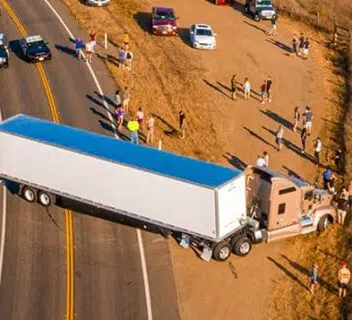
If you’ve been injured in a semi truck accident, then you may be wondering whether you have a legal case for damages, and also what the “average semi truck accident settlement” is so that you can evaluate what sort of compensation you should be satisfied with.

The average semi truck accident settlement can vary significantly due to various factors and considerations, such as the complexity of determining liability, the substantial economic impact including medical bills, funeral expenses, property damage, and loss of income. As you explore the basics of truck accident disputes, it’s worth exploring the possibility of working with an experienced truck accident lawyer, too. They can help you at every stage of litigation, from start-to-finish.

That being said, if you’d like to learn more about the average semi truck accident settlement and various other aspects of semi truck accident settlements before contacting an attorney, we encourage you to read on! We’ll cover some of the foundational aspects that you need to know.

Why are trucking accidents a serious issue?

Trucking accidents are a “serious issue” because large trucks (i.e., 18 wheelers, semi trucks, large delivery vans, etc.) expose others to unique dangers.  Truck accident victim injuries tend to be rather severe, and common. Dangerous elements include the following:

  • Large trucks tend to be heavy.  This weight makes them less agile and less maneuverable overall, which can lead to a higher frequency of accidents.  It also increases the impact force of a collision when an accident does occur — this can lead to much more severe injury (or even fatalities).
  • Large trucks have challenging sight lines.  Due to the size of the vehicle, it can be quite difficult for a trucker to manage a comprehensive view of the roadway around him — which can contribute to accidents, especially since other drivers often don’t feel comfortable maneuvering around 18 wheelers.
  • Trucking company work schedules can be grueling, and the incentives can encourage truckers to engage in unsafe behavior.  Truck drivers often use stimulants and various drugs to keep up with their work schedules.  They may also push themselves too hard, becoming fatigued on the road.  This can easily lead to more serious truck collision accidents — both in terms of frequency and severe injuries.

Who can I sue in a truck accident lawsuit?

In a truck accident lawsuit, you can potentially sue:

  • The other driver (i.e., the truck driver who hit you)
  • Any other drivers who contributed to the accident
  • The trucking company that employed the truck driver
  • Any other companies who were involved in the employment chain-of-command
  • Any manufacturers whose parts defects contributed to the accident
  • Any auto repair shop whose failure to properly inspect, maintain, and fix a vehicle contributed to the accident
  • The City, if some dangerous condition of their property contributed to the accident
  • Any private property owner whose dangerous condition of property contributed to the accident
  • And more

Phew!  That’s a lot of potential defendants, depending on the circumstances of your case.  

That being said, it can be useful to sue multiple defendants, as it’s strategically beneficial when you believe that a defendant may not have the insurance coverage necessary to pay out your damages in full.  For example, a truck driver might not have sufficient personal insurance coverage.  But the trucking company that employs him will very likely have sufficient liability insurance coverage to pay you out in full.  Accessing “deep pockets” is an important strategy in personal injury litigation.

How much will you get paid if an 18 wheeler hits you?

The amount you can potentially get paid — your compensation — depends on the claimable losses that you suffered as a result of the semi truck accident. These claimable losses include, but are not limited to:

  • Lost wages
  • Loss of earning capacity
  • Loss of property
  • Loss of companionship
  • Loss of enjoyment of life
  • Medical expenses (i.e., comprehensive medical bills for whatever medical treatment you needed post-accident)
  • Pain and suffering (i.e., the subjective physical, emotional, and psychological harm you experienced during and after the accident)

The average truck accident settlement can vary widely due to the various factors and considerations that impact the compensation awarded to victims, such as medical bills, funeral expenses, property damage, and loss of income.

Compensation can vary substantially from case-to-case, even when the truck accident case itself is very similar. That’s because the compensation you’re owed is based on the particular losses that you suffered — each person and their circumstances are unique, thus creating a different set of losses.

For example, suppose that you’re injured in an 18 wheeler truck accident. In scenario A, you are unemployed at the time of the accident — you’d therefore have a zero dollar (or close to zero) lost wages claim. In scenario B, you are gainfully employed at a high-paying job at the time of the accident, and are forced to take half a year off from work to recover from your injuries — you’d therefore have a rather substantial lost wages claim. The difference could be in the tens of thousands of dollars, or more!

Given the variation, it’s important to consult an experienced personal injury lawyer who can help you “work up” your case to its maximum potential damages amount. Truck accidents can lead to complex disputes, so it’s sensible to talk to an attorney about the possibilities.

Why do most truck accident disputes end in a settlement?

Most truck accident disputes (like other personal injury and accident disputes) end in a settlement compromise because trial litigation comes with a lot of challenges that are best avoided by most parties.

Trial litigation can be:

  • Resource-intensive
  • Uncertain
  • Public
  • Distracting
  • And more

For example, suppose that you’re suing a local trucking company after you’ve suffered injuries in an accident involving one of their truck drivers.  The trucking company defendant may want to avoid litigation, as it is a public affair that can be reported on by the media.  If the story gets widely reported, their brand and reputation could be damaged, and they could face long-term business-related repercussions.

On your side, you may want to avoid the inherent uncertainty of trial litigation — even if you have a strong case, there’s always a chance that the court doesn’t award you a “win,” or that they award you less compensation than you would have ideally wanted.

Thus, you both have an incentive to resolve the dispute through an early settlement.  You get to avoid the uncertainty of trial, and the trucking company gets to avoid the damaging impact of a public dispute over truck accidents and safety issues.

How much is the average accident settlement?

It doesn’t serve anyone to talk about the average truck accident settlement. That’s because every case — the circumstances and the parties — are different. Factors that can influence your settlement offer include:

  • The hostility of the defendant to reaching an amicable compromise
  • The willingness of the defendant to face public scrutiny over the dispute
  • The strength (legal argument/evidence) of the liability claims
  • The strength (legal argument/evidence) of the damages claims
  • How likable you are as an injury victim plaintiff
  • How authoritative your expert witnesses are
  • How trustworthy your eyewitnesses are
  • And more

Given these (and other) factors, there’s really no point in obsessing over what the “average truck accident settlement” is. Whatever the average settlement is, it will not apply to your case, nor should it serve as a barometer of success for your truck accident claim. In reality, you’ll have to evaluate the facts and particularities of your truck accident case with your attorney, who can then help you understand what sort of truck accident settlements fairly account for the likelihood of success were your case to proceed all the way to trial.

How much do lawyers take from a semi truck accident settlement?

Depending on the phase of the personal injury lawsuit (when the settlement compromise is finalized) — and how much of a percentage cut has been negotiated with the attorney before the start of representation — most plaintiffs’-side truck accident lawyers will take between a 25 percent to 40 percent cut of the compensation they secure on your behalf (here, the settlement amount).

How do I know whether I can afford to hire a truck accident lawyer to help me with my case?

Regardless of your financial circumstances, you absolutely can afford to hire a truck accident attorney to represent you in your semi truck accident dispute.  That’s because most truck accident attorneys work on a contingency fee basis — in other words, you don’t pay anything upfront or out-of-pocket.

It costs you literally nothing unless and until they secure compensation on your behalf, at which point they will take a percentage cut of your compensation payout, whether that’s through a claim submitted to the insurance company or through litigation.  If you don’t get paid, then you don’t pay them anything.  That means you always walk away with “at least” the same amount of money that you started with.

Contingency fees not only lower the barrier-to-entry for securing personal injury legal representation — they also incentivize personal injury lawyers to work to efficiently and effectively maximize your compensation.  That’s because they get paid only if you win, and further, they get paid more if you get paid more.

It’s a win-win.

If you’ve been injured in a semi truck accident, then you could be entitled to sue for compensation under the law.  Navigating the legal process can be challenging and confusing for many first-time plaintiffs, however, especially since a truck accident lawsuit may involve many unique dynamics as compared to a “standard” motor vehicle accident dispute.  That’s why it’s so important to work with experienced truck accident lawyers who understand semi truck accidents litigation and how best to secure compensation in that context.

Contact 1-800-THE-LAW2 for a free legal consultation with a qualified truck accident attorney in our network.  During this initial consultation, you’ll have the opportunity to discuss your case in detail and to learn more about what strategic options are available to you.  Of course, if you decide against moving forward, that’s okay, too — there’s no obligation to continue.  So pick up the phone and call us today to get started!

We look forward to assisting you.

Can I Sue for Being Hit by a Truck?

If you’ve been in a commercial truck accident, then you may be able to sue for being hit by a truck. That being said, the dispute may not unfold as simply as you initially think — litigation is complex, and there are many unique challenges and opportunities to be aware of as you move forward. Whether you’re looking to secure benefits from the insurance company or push ahead with a lawsuit (or both), it’s important that you consider all the strategic options for your truck accident claim.

We encourage you to consult with an experienced truck accident lawyer at an early stage in your dispute. By calling 1-800-THE-LAW2, you can connect to a personal injury lawyer in our network for a free consultation today! Of course, if you’d like to learn more about trucking accident litigation, then read on — we’ll run through some truck accident case basics.

What makes truck accidents uniquely dangerous?

Truck accidents tend to cause more severe injuries (and deaths) than other types of motor vehicle accidents, such as car accidents. It’s no surprise that attorneys encourage plaintiffs to sue for being hit by a truck — the life impacts can be substantial, after all.

Why is getting hit by a semi so dangerous?  It’s actually quite simple. Large trucks tend to be more dangerous because:

  • They are less maneuverable, due to their weight, shape, and sightline restrictions
  • They take longer to come to a complete stop
  • The impact force of a collision is substantially higher than that of a smaller vehicle
  • Commercial truck drivers often have to work difficult hours and schedules, which can result in issues like fatigue, substance abuse, etc.
  • They are significantly bigger and heavier than passenger vehicles, leading to more severe injuries and fatalities for the passengers in cars during accidents.
  • And more

How do I determine whether I can sue for a truck accident claim?

Liability can be imposed if you can show:

  1. That the defendant violated their duty of care; and
  2. That in violating this duty of care, the defendant caused you to sustain damages.

Simple, right?  Not exactly.  While these basic elements cover a variety of different circumstances, they can be challenging to establish in a litigation setting.  That’s because these elements tend to have subtle nuances that can lead to additional challenges.

For example, suppose that you sustain a serious back injury in a truck accident, but you have a preexisting back injury already.  The defendant may attempt to argue that while they were speeding (i.e., they did violate their duty of care to others), they did not actually cause you to sustain damages, as your injuries were preexistent.  Unless you can establish that your preexistent injuries are distinct, or that they were exacerbated by the accident, then the elements required for liability are not met — and this can pose a problem for the case.

Given these (and other) potential complications, it’s absolutely critical that you work with experienced personal injury lawyers who understand how to build up your case and navigate around unique challenges.

How much will you get paid if an 18 wheeler hits you?

Damages in a semi truck accident dispute change from case-to-case, and the damages that you’re entitled to recover are for claimable losses, which are quite variable.  Claimable losses include:

  • Lost wages
  • Loss of earning capacity
  • Loss of property
  • Loss of companionship
  • Loss of enjoyment of life
  • Medical expenses (i.e., medical bills for medical treatment)
  • Pain and suffering
  • And more

How much you’ll “get paid” depends on the particularities of your case.  For example, if you are unemployed, then your lost wages claim will be minimal to zero.  On the other hand, if you are gainfully employed (and are forced to take a significant amount of time off from work after the accident), then your lost wages claim may be quite large.

How much are most truck accident settlements?

There is no set-in-stone truck accident settlement amount.  A variety of factors will determine your settlement offers, though — at a foundational level — what increases the settlement amount is when you can show that you are likely to receive your claimed damages if the case were to proceed to trial.

For example, if you can introduce a strong enough legal argument and substantial enough evidence that the opposing party agrees you have an 80 percent chance of securing your claimed $100,000 damages, then an $80,000 settlement compromise would be “fair” for the case circumstances.

Factors that can influence your settlement amounts include:

  • The hostility of the defendant and their willingness to negotiate a settlement
  • The strength of your liability claim
  • The strength of your damages claim
  • How sympathetic and likable you are as a plaintiff
  • How sympathetic and likable the defendant is
  • How authoritative and legitimate your expert witnesses appear
  • How believable your eyewitnesses seem
  • How much negative publicity the defendant will face if the case moves forward
  • How significant the financial resources the defendant is willing to spend on the case
  • And more

Who can I sue for being hit by a truck?

If you’re hit by a truck, then — depending on the circumstances of your case — you can potentially sue the following defendants:

  • The truck driver who hit you
  • Any other drivers who may have contributed to the accident
  • The trucking company that employed the truck driver
  • The City, if some hazard on the roadway contributed to the accident
  • Any private property owner whose property hazard contributed to the accident
  • The auto manufacturer, if some defect of the vehicle contributed to the accident
  • And more

In commercial trucking accidents, one advantage is that you may be able to bring an action for damages against the trucking company that employs the truck driver.  Trucking companies can be held “vicariously liable” for the negligence of their drivers, so long as the driver was working at the time of the accident.

This has a few major advantages: a) the trucking company is likely to have more significant insurance coverage, so they may be able to pay out your damages in full, and b) the brand damage of an accident lawsuit could be substantial for a trucking company, and so they may be more willing to negotiate an early settlement to avoid the publicity of a lawsuit.

How much does it cost to hire an experienced truck accident lawyer?

Though many people believe that it is too costly to hire a truck accident lawyer to handle their case (i.e., that they can’t afford to do so), this is a common misperception.  In truth, most plaintiffs’-side accident attorneys offer their services on a contingency fee basis.  What does this mean?

When an attorney offers their services on a contingency fee basis, they are offering to represent you (the injured plaintiff) at no upfront or out-of-pocket cost.  Instead, they will take a percentage cut of whatever compensation they’re able to secure on your behalf.  This percentage can range from 25 percent to 40 percent or more, depending on what you negotiate and what phase the case is in when it is resolved.

If you don’t “win” compensation, then you don’t have to pay anything.  That creates a really favorable dynamic for injury victims — there’s not only a lower barrier-to-entry (since there are no costs unless you win), but there’s also incentive for the attorney to work to secure compensation on your behalf and to try and maximize that compensation.  That’s because the more you get paid, the more they get paid.

It’s a win-win situation.

If you’ve sustained serious injuries in a truck accident, then you could be entitled to sue for being hit by a truck. After all, you may be able to secure compensation under the law — but in order to effectively pursue a claim and maximize your potential damages, you’ll want to work with experienced truck accident lawyers who understand how best to navigate the litigation process.  We can help you access the necessary legal services.

Contact 1-800-THE-LAW2 for a free legal consultation with an experienced personal injury lawyer in our network who can help you explore the possibility of fair compensation for your personal injury claim.  During this initial consultation, you’ll be able to discuss your truck accident claims in detail and learn more about what options you have to recover compensation.  If you decide not to move forward with a truck accident lawsuit, that’s okay — there’s no obligation to continue.  As such, there’s no downside to calling in to get started today.

We look forward to assisting you!

What to Do When Involved in a Parked Car Hit and Run Accident | Car Accidents Attorneys

Navigating the aftermath of a car accident can be daunting, particularly when it involves a parked vehicle. Imagine the unsettling feeling of discovering that someone hit your parked car. The scenarios can be varied: from someone returning from grocery shopping only to find a dent with no note, to a driver who accidentally brushes against a parked car and leaves in a hurry. These are instances that play out frequently on our roads and parking spaces.

According to an Allstate Insurance study from 2010, 69 percent of all hit and runs in the U.S. involve parked cars. If your parked car was damaged in a hit and run incident, you may be feeling lost and confused about what to do – after all, it’s not clear whether your insurance provider will cover the damages, or whether you’ll be able to identify who caused the collision so that you can contact them for insurance information or compensation.

Given the complexities of hit and run accidents, here are some considerations to keep in mind as you proceed.

When a hit and run in a parking lot occurs, many questions arise. Does insurance cover a hit and run parked car? Will you need an accident report, and does it matter whether it’s an official accident report? What is the claims process and what does it look like? What are the implications of your parked car being hit concerning your auto insurance premium? How crucial are photos of the damage? How immediately should one report the accident to ensure full collision coverage? Comprehensive coverage is important if the damage is severe, for example, but getting insurance pay isn’t always straightforward.

It’s essential to be equipped with the right information and know the steps to take when faced with such situations. As the victim tries to piece together what happened, gather evidence, identify eyewitnesses, and move forward with legal remedies, having clarity on the process can significantly ease the strain of the situation.

In this guide, we’ll detail what you should do in the unfortunate event of a hit and run involving your parked car.

What Should I Do If Someone Hits My Parked Car?

Discovering that your vehicle has been hit while parked can be an upsetting and confusing experience. You may find yourself overwhelmed with questions about the best course of action. This guide aims to provide a comprehensive roadmap for dealing with such an incident, covering everything from gathering evidence to dealing with insurance claims.

Initial Steps When You Discover the Damage

  1. Check for the Other Driver or a Note: Upon noticing the damage, your first step should be to look for the other driver. If they’re still around, exchange information including names, contact details, insurance information, and vehicle registration numbers. If the driver has left, check for a note with their contact and insurance details.
  2. Look for Witnesses and Security Footage: If no note is left and the driver is absent, search for potential witnesses who might have seen the incident. Their testimonies can be invaluable. Additionally, check if there are security cameras in the area that might have captured the collision. Speak to security personnel or property owners to gain access to this footage.
  3. Document the Scene: Take clear photographs of the damage to your vehicle from multiple angles. Also, photograph the surroundings to provide context about the location of the incident. This visual evidence is crucial for insurance purposes and, if necessary, legal proceedings.
  4. Contact the Police: If the damage is significant, it’s advisable to call the police. They can file a report, which not only helps in the insurance claim process but also in legally documenting the event. In some jurisdictions, it’s required by law to report such incidents to the police.
  5. Notify Your Insurance Company: As soon as possible, inform your insurance company about the incident, even if you don’t have the other party’s details. Provide them with all the information and evidence you’ve gathered. If the other driver left their details, contact their insurance company as well.

Dealing with Insurance

  1. Understanding Your Coverage: Understand the specifics of your insurance policy. Does it cover hit-and-run incidents? Are you covered for uninsured motorists? Knowing these details will help you understand how much of the repair costs your policy will cover.
  2. Avoid Engaging Without Consulting an Attorney: Discussions without an attorney can lead to subtle, undermining disclosures that could result in a lower payout or even an insurance claim rejection. As the claimant, unless you’re trained in the law you will not necessarily know what to say and what not to say – that’s where an attorney comes in.
  3. Filing the Claim: When filing a claim, be as detailed as possible. Provide all the evidence you’ve gathered, including photos, witness testimonies, and the police report. Be honest and thorough in your account of the incident.
  4. Managing Repairs: Depending on your coverage, you may have to initially pay for repairs out of pocket, especially if the other driver is unidentified. Keep all receipts and documentation for reimbursement purposes.
  1. Understanding Hit-and-Run Laws: Familiarize yourself with local hit-and-run laws. In many places, leaving the scene of an accident without providing contact information is a criminal offense.
  2. Seeking Legal Advice: If you face challenges in getting your claim accepted or if the other party disputes their involvement, consider consulting with a lawyer. Legal professionals can offer guidance and representation, ensuring that your rights are protected.

Preventative Measures for the Future

Choosing Safe Parking Spots: Try to park in well-lit, secure areas with surveillance cameras. This not only deters potential hit-and-run drivers but also ensures that any incident is recorded.

Investing in a Dash Cam: Consider installing a dash cam with parking mode in your vehicle. This can provide crucial evidence in case of any such incidents in the future.

Being the victim of a parking lot collision can be a distressing experience, but knowing how to effectively respond can alleviate some of the stress and uncertainty. By following these steps, you can ensure that you’re adequately prepared to handle the situation, both practically and legally. Remember, if you’re ever unsure about what to do, seeking professional legal advice can provide clarity and support.

Navigating the aftermath of a hit and run involving a parked car can be daunting, but being armed with the right information and steps to take ensures that the situation is handled effectively and ethically. 

Understanding your responsibilities and rights is paramount. Always remember to prioritize safety, act responsibly, and seek guidance when needed.

Car accidents, even those involving stationary vehicles, have legal, financial, and moral dimensions. And in such trying times, remember that insurance providers, security personnel, and legal experts are there to assist.

Stay informed, stay calm, and ensure you make the best decisions moving forward.

Can I Sue for Being Hit by a Semi Truck?

If you’ve been injured in a large truck collision, then you may be wondering whether you can sue for being hit by a semi truck.  Perhaps!  In evaluating whether you have an actionable claim, you’ll want to first discuss the case with a qualified personal injury attorney.  Your attorney will also be able to help you navigate the strategic and procedural complexities that are typical of litigation.

Of course, if you’d rather learn a bit more about the legalities of semi truck accidents and some basic issues in truck accident claim litigation, read on!

Why are trucking accidents a serious issue?

Truck collisions are uniquely dangerous, and the statistics prove it.  According to the 2022 data, for example, there were 160,000 truck accidents, resulting in more than 5,100 deaths and 73,000 injuries.  Those injuries tend to be more severe, too.

These unique dangers are because:

  • Large trucks (i.e., big rigs, semi trucks) have poor maneuverability and offer poor peripheral visibility, so it can be difficult for a semi truck driver to avoid hazards
  • Large trucks are heavy.  Their weight is so significant that when they do collide with another vehicle, the impact force is enough to crush and overcome the protective systems of the other vehicle — causing direct damage to the driver and passengers in the other vehicle
  • Truck drivers are generally driving as a job.  Dangerous truck driver behaviors are common due to the pressures of the job. Their employers (the trucking company) may impose strict schedules and demands on these drivers, thus encouraging the drivers to abuse stimulants and avoid resting properly in an effort to obtain monetary incentives. Trucking companies have a large role to play in this regard, as federal regulations can’t cover every aspect of safety — when serious injuries are a potential risk, it’s critical that trucking companies implement policies internally that limit the likelihood of dangerous truck driver behavior and semi truck accident injuries
  • And more

Can I sue for being hit by a semi truck?

Maybe — it depends on the facts of your case (semi truck accident cases tend to vary quite a bit!).  In order to successfully impose liability in a lawsuit, or to secure benefits from the insurance company, you’ll have to show that:

  1. The truck driver engaged in negligence, recklessness, or intentional misconduct, and
  2. As a result of the truck driver’s misconduct, you sustained injuries.

If you can establish these elements, then you’ll be equipped to push forward and argue for the damages you deserve.  If there’s a fundamental issue with establishing any of these elements, however, then you could face challenges as you progress through litigation.

For example, it’s important that you be able to show that the truck driver’s negligence actually caused your injuries.  If the truck driver collides with you, but at the same time you’re struck by a lightning bolt, then the defendant may argue that it was the lightning bolt that caused your injuries, not the truck.

Why do most semi truck accident disputes end in settlement?

Most personal injury disputes — including those involving a semi truck accident — are resolved through a negotiated settlement.  In fact, industry observers estimate that 95 percent or more of civil disputes end in a settlement agreement.

But why are settlements so common? The truth is that trial litigation tends to be:

  • Resource-intensive
  • Uncertain
  • Public
  • Exhausting and distracting
  • And more

These aspects can be undesirable for many parties.

For example, a business defendant may want to avoid the negative publicity of the trial, as media reporting could damage their brand and reputation considerably.  Similarly, if you’re risk-averse and don’t want to walk away from a dispute without any compensation, you might not want to go to trial, as there’s always the inherent uncertainty of the court finding against you — wins and losses in court have an element of uncertainty, after all.

To avoid these issues, most disputing parties choose to negotiate a settlement as opposed to go to trial.

How can I maximize my semi truck accident settlement?

Settlement offers improve when: a) the defendant shows a willingness to settle, as opposed to pushing ahead to trial, and b) you (the plaintiff) are able to show that there is strong evidence and a strong legal argument in support of your claims, such that you would be likely to win if the case were to proceed to trial.

As such, factors that can influence the settlement offers you receive include:

  • The hostility of the defendant and their willingness to settle
  • The strength of the evidence in support of your liability claim
  • The strength of the evidence in support of your damages claim
  • How sympathetic and relatable you are as an injured plaintiff
  • How legitimate and well-presenting your witnesses are
  • How damaging to the defendant’s reputation/brand a public lawsuit would be
  • How much resources the defendant has at their disposal to litigate for an extended period of time
  • And more

For example, suppose that you are having a back-and-forth negotiation with the defendant regarding a settlement amount.  You and the defendant agree that you have a 60 percent chance of “winning” your $100,000 claimed damages, should the case proceed all the way through to trial.  Under these circumstances, a “fair” settlement would hover around $60,000 then — that being said, the number could shift based off of other factors.

What damages can I claim for my accident?

In a semi truck accident, you can claim damages for any losses that you sustained as a result of the defendant’s negligent, reckless, or intentional actions.  Claimable losses can vary quite a bit and include:

  • Lost wages
  • Loss of earning capacity
  • Medical expenses (i.e., medical bills for medical treatment)
  • Loss of property
  • Loss of enjoyment of life
  • Loss of companionship
  • Pain and suffering
  • And more

Damages can vary substantially from case-to-case depending on the underlying facts and circumstances.

For example, if you’re injured in a semi truck collision, but you are unemployed (and have been unemployed for years), then your lost wages claim would be close to zero.  On the other hand, if you’re in the same accident scenario but are gainfully employed, then you may have a significant lost wages claim due to time needed off from work after the accident.

Given these varied outcomes, it’s critical that you work with experienced truck accident lawyers who understand how to build up your case and navigate the complexities of damage assertions.

Who can I sue for compensation in a semi truck accident dispute?

There are several different defendants that you can potentially sue.  These may include, but are not limited to:

  • The trucker/truck driver who collided with you
  • Anyone who may have distracted the truck driver
  • Any other driver who may have contributed to the accident
  • The truck driver’s employer (if the truck driver was working at the time of the accident). Trucking industry issues are commonly at the center of a commercial truck accident
  • The City, if a dangerous condition of City property contributed to the accident
  • Any property owner whose dangerous condition of property contributed to the accident
  • Medical professionals whose negligence worsened or created your post-accident health issues
  • And more

In the semi truck accident context, specifically, suing the employer (of the truck driver who hit you) is very common.  That’s because of a doctrine known as “vicarious liability,” which allows injured plaintiffs to sue and impose liability on the employer of the defendant for any on-the-job negligence that causes harm.

Vicarious liability is enormously helpful in many disputes, particularly trucking accident disputes.  Why?  Well, the truck driver who hit you might not have adequate insurance coverage to pay out for all your damages.  To ensure that you have a sufficient payout, you’d want to bring your truck accident claims against a defendant who has “deep pockets” — like a business/employer defendant.

How can an attorney help me in my truck accident lawsuit?

Attorneys are not just courtroom advocates.  An experienced truck accident lawyer can and will take on a number of different responsibilities over the course of a lawsuit.  These varied duties and tasks include, but are not limited to:

  • Identifying, gathering, and preserving relevant evidence
  • Speaking to third parties (i.e., witnesses, opposing counsel, insurance companies, law enforcement officers, etc.) on your behalf
  • Developing a persuasive legal argument based on the facts
  • Navigating various court-required hearings
  • Negotiating a potential settlement compromise
  • Pushing ahead to trial, if necessary
  • Fighting for the client’s rights at trial
  • Securing whatever compensation has been paid out
  • And more

That’s a lot of different tasks handled by the attorney.  As such, it’s important to actually use an attorney — it’s generally not a good idea to move forward without an attorney, given the complexity and volume of professional-level tasks that you’ll have to handle for your case.

You may be wondering: can I sue for being hit by a semi truck?  Well, if you’ve been injured in a semi truck accident (i.e., a truck driver loses control and hits you, or is speeding and swerves into you), then you could be entitled to sue and recover compensation under the law.  Whether you can successfully obtain damages will depend largely on how effectively you can navigate the dynamic and challenging process that is litigation.  As such, it’s important that you work with an experienced truck accident attorney for guidance — after all, commercial truck accidents and the litigation process surrounding commercial vehicles tend to be more complicated.

Contact 1-800-THE-LAW2 for a free legal consultation with a skilled personal injury lawyer in our network who can help you litigate a truck accident dispute and potentially maximize the total compensation amount that you’re able to secure.  If you decide against moving forward with your case, or with the attorney, that’s okay — there’s no obligation to continue.  As such, there’s really no downside to picking up the phone and calling in for a free consultation today.

We look forward to assisting you.  Truck accident victims deserve the opportunity to fight to secure compensation for their injuries.

Occupational Insurance vs. Workers’ Comp

Workers’ compensation and occupational accident insurance, including occupational accident policies, both provide a level of protection for employees in the event of workplace injuries. Whether you are a startup business, a midsized corporation, a full-time employee, or an independent contractor, it is important that you understand the differences between the two (workers’ compensation and occupational accident insurance) in order to protect you when it comes to workplace accidents.

The nature of occupational insurance vs workers comp is such that your claims are likely to be significantly different (and the case strategy different as well) depending on what “category” it falls under. In truth, many people are confused as to the differences — that’s because occupational insurance vs workers comp both contemplate issues in the workplace. The coverage tends to be quite similar. That being said, the ways in which that coverage is effectuated are quite unique, depending on which one applies to your claim.

Workers’ Compensation Insurance

Workers’ compensation policies are a state-regulated requirement for companies that employ a minimum number of workers, or employees who work a certain number of hours per week as mandated by law. The minimum number of employees differs by state, but in some instances, it refers to one or more employees, while others allow for 5+ employees.

Workers’ compensation policies may cover lost wages, medical treatment and related expenses, and rehabilitation for employees who suffer an injury at work, or who get sick due to factors within their workplace environment. The insurance also includes employer liability coverage, meaning that employers receive a level of protection if the worker decides to sue in relation to their workers’ comp claim. The legal defense costs are often covered up to the policy limits. Employers still have a responsibility to maintain a safe work environment for their workers.

Occupational Accident Insurance

Occupational accident insurance is a policy that is designed to offer benefits to independent contractors and employees who are not covered under a workers’ comp program, including covering medical expenses resulting from work-related injuries. This type of insurance may provide medical, disability, and accidental death and dismemberment benefits, but unlike workers’ compensation – it is not state-regulated. This type of insurance is particularly popular in the trucking industry, where it provides coverage for independent contractors and owner-operators. Policies may cover wage loss benefits, medical expenses, and rehabilitation costs for employees or covered independent contractors, but only up to policy limits, specifically focusing on injuries or deaths resulting from a work-related accident. Employers are allowed to choose their coverage and deductible amounts based on their own perceived risk.

Workers’ comp involves a higher cost to companies, but it also offers them more comprehensive coverage, especially in terms of their own liability – a component that is not a part of occupational accident insurance.

In some states, employers who choose occupational accident insurance can opt for the required workers’ compensation program. While the employer still has a legal obligation to employees who suffer injuries or death on the job, it comes at a much lower cost compared to workers’ comp.

Employers get statutory benefits with workers’ comp but when signing up for occupational accident insurance, they must make the following choices:

  1. The limit of liability to carry per accident
  2. The deductible to assume per accident
  3. The level of disability coverage to provide
  4. The level of death benefits to provide

Companies will still be responsible for work-related injuries to their employees that are not covered by occupational accident insurance. Choosing the wrong occupational accident coverage option can expose a company to dramatic financial losses – a problem that those with workers’ compensation insurance are less susceptible to.

Disadvantages of Occupational Insurance

While occupational insurance allows companies to save money when compared to workers’ compensation and gives employers control of the type and amount of coverage to provide employees, there are several disadvantages:

  • The employer must bear the burden of proof in the event of a lawsuit
  • Employees can win claims for pain, suffering, and punitive damages up to a certain limit
  • If an employee’s expenses exceed occupational accident coverage limits, employers will have to cover the excess costs

As an employer, consult with an experienced attorney to ensure you understand the risks associated with workers’ compensation coverage vs. occupational insurance coverage.

As an employee, talk to an experienced worker’s compensation lawyer if you have been hurt on the job to understand the differences between occupational insurance vs workers comp so that you can understand how to proceed with a claim depending on the coverage your company offers. Even if your company does not provide coverage, there may be legal options for you to secure the compensation you deserve, so don’t resign yourself to an unfavorable outcome — speak to an attorney about what you need to do to get your case properly handled.

What Percentage of Personal Injury Cases Go to Trial?

If you’ve been injured in an accident (whether it’s a car accident or a slip and fall accident or anything else), then you could be entitled to sue the defendant for damages under the law. The prospect of moving forward with a lawsuit can be intimidating and overwhelming for many people, however, especially first-time plaintiffs. But the reality is that most personal injury disputes are not handled in a courtroom trial setting — what percentage of personal injury cases that go to trial is extremely high.

Insurance companies often play a significant role in personal injury cases, as they are typically involved in settlement negotiations and can influence whether a case goes to trial.

So, the fact that what percentage of personal injury cases go to trial is not widely known can impact the stresses felt by injury victims. They don’t realize that most of these personal injury claims are handled in informal settlement negotiations, and often early, well before trial litigation for the personal injury case.

There’s really nothing to be overwhelmed by when it comes to personal injury lawsuits. When you work with an experienced personal injury lawyer, they will handle all aspects of the case on your behalf — and they will not push forward to a high-conflict trial for the personal injury claim unless you demand it, or unless it is absolutely necessary to secure the maximum compensation for you. An experienced personal injury attorney will understand this, and that’s why the percentage of personal injury cases that go to trial is so high.

If you’d like to learn more about “what percentage of personal injury cases go to trial” and “why,” then read on! We’ll explore some of the basics of personal injuries and related disputes, and why it’s so rare to go to trial.

What percentage of cases are settled before trial?

There are no exact numbers, as settlement agreements for personal injury claims are — by their very nature — privately handled, and so the data on how many cases go to trial is not publicly available. That being said, legal industry experts have estimated that as much as 95 percent of personal injury disputes are settled before trial! This is an enormous percentage and tracks with the real-life experiences of most personal injury attorneys.

The fact that the vast majority of cases are resolved through settlement often surprises those who are unfamiliar with litigation — and for good reason. Popular media sells us the image of legal representation as deeply conflict-oriented, aggressive, and institutional. The image of an attorney fiercely and relentlessly advocating in a courtroom setting is the most prominent one in American popular media. To go to trial is deeply “American” in the media. But it’s not the norm in reality.

The process of reaching a personal injury settlement often involves negotiations where both parties assess the strength of the case and agree on a fair compensation amount. This is managed by a personal injury attorney.

It’s not that this image is false. The reality, however, is that most legal representation is oriented toward finding negotiated solutions that are efficient and effective — it is not obsessed with pushing full steam ahead to trial. That being said, skilled accident attorneys understand that the way to most effectively handle a settlement negotiation process is to be fully prepared for trial. Not every attorney is willing to invest the resources and time into preparing themselves for the possibility of trial litigation, so make sure that you address this with whoever you decide to work with.

Why do people settle instead of going to trial?

It’s true that — on the whole — most parties in personal injury cases prefer to settle their accident dispute as opposed to go to trial. There are a number of different reasons for this, but generally speaking, trial litigation comes with negative aspects that parties want to avoid.

Personal injury trials can be particularly daunting due to the extensive preparation and the unpredictability of jury decisions.

These negative aspects include the following:

  • Uncertainty
  • Resource-intensive
  • Exhausting and distracting
  • Publicity
  • And more

For now, we’ll address two of the issues: uncertainty and publicity.

Uncertainty is innate to litigation. Should your case proceed to trial, there is no guarantee that you will a) win your case, and b) even if you win, that the court will award you the claimed damages in full. This inherent uncertainty can be bothersome for many parties. For the defendant, it can be extremely intimidating, as they lose hundreds of thousands of dollars (or even millions) following an unexpected court decision.

Given these risks, the large majority of parties prefer to negotiate a settlement that’s based on their shared understanding of the “strength” of the case. For example, if both parties agree that you (the injured plaintiff) have a 70 percent likelihood of winning the case and receiving your damages in full, then your $100,000 damage claim could reasonably result in a $70,000 settlement compromise. It’s ultimately a win-win for both parties, as it avoids the hassle and cost of litigation while ensuring that the agreed-upon number matches the perceived strength of the case.

Publicity is another aspect of litigation that many people don’t realize. Litigation is a matter of public interest — your case can be looked up by anyone, and the details revealed. This isn’t as much of a problem for the injured plaintiff, but for a defendant who has caused the injury to you, the negative publicity could be substantial (i.e., brand damage, reputational harm). Some business brands don’t recover from particularly bad personal injury disputes, especially if their brand is tied in some way to safety.

Settlement negotiations can occur privately, however, and the details of settlement may also remain private. As such, this is vastly preferable for many business defendants. Best of all, it gives you — the injury victim — a great deal of leverage in settlement negotiations, enough to pressure the defendant into offering you a more favorable agreement.

How close to trial do cases settle?

A personal injury claim can settle anytime before the trial is complete. In fact, a personal injury dispute can settle in the middle of a trial! So it may not be too late for your dispute to be resolved through a settlement compromise. Even if a personal injury trial has already begun, parties can still reach a settlement agreement to avoid further litigation. That being said, most cases settle before the trial litigation process begins.

Note: it’s irrelevant to the settlement itself when it occurs. Of course, the deeper into the litigation process that a case settles, the more supportive evidence there may be for your various claims, which can help to validate your settlement request.

Why do lawyers drag out cases?

Plaintiffs’-side attorneys generally do not drag out personal injury lawsuits — in fact, they are incentivized to try and efficiently handle cases, as they usually work on contingency. That means that they only get paid if (and when) you get paid. As such, the longer they work on a case, the more costs they take on.

Defense attorneys, on the other hand, are typically paid on an hourly basis. They are therefore incentivized to drag out a case as long as possible so that they can get paid more by their own client (the defendant). This isn’t necessarily a bad thing, however — the defendant’s costs for longer litigation are much higher than yours (the plaintiff), and as such, it’s easier to pressure them into an early settlement compromise.

How much should I ask for settlement?

What is considered a “fair settlement offer” depends on the circumstances of your case, and more specifically, the likelihood that you will succeed in receiving the compensation that you’re claiming, should the case proceed to trial. As such, you’ll have to evaluate a range of different factors that contribute to your likelihood of success and the defendant’s willingness to settle the dispute.

Understanding personal injury law is crucial in evaluating these factors and determining a fair settlement amount.

These factors include:

  • The hostility of the defendant
  • The willingness of the defendant to settle
  • Business cost dynamics that incentivize the defendant to engage in complex litigation (to discourage others from suing)
  • The strength of the evidence in support of your liability claim
  • The strength of the evidence in support of your damages claim
  • How sympathetic and/or relatable a plaintiff you are to the court
  • The potential brand/reputational damage that the defendant will face should they allow the case to proceed to trial litigation
  • And more

For example, suppose that you’re injured in a car accident with a commercial driver who works for a local delivery company — due to vicarious liability principles, you can sue the delivery company directly. The delivery company is concerned about brand damage should the case be litigated further, as local media will pick up on the case and report on it. This could create a lot of negative publicity for the company, and they are reliant on their reputation for safety and good drivers.

Even if your case is not as “strong” as you might ideally want, the delivery company may still choose to offer you a favorable early settlement just to avoid potential brand damage. This is an important aspect of litigation — strategic leverage goes beyond the courtroom, after all.

Attorneys don’t necessarily cost anything upfront

Many people mistakenly believe that you have to be “rich” to hire an attorney to handle their personal injury lawsuit — in reality, you don’t need any money to get started, so long as the attorney offers their services on a contingency basis.

Well, even if you have no money in your account, you’re in luck — that’s because most personal injury attorneys work on a contingency fee basis.  How do contingency fee dynamics work?

When you hire an attorney on a contingency fee basis, you don’t pay anything upfront or out-of-pocket.  Instead, the attorney will take a percentage cut of whatever compensation they’re able to secure on your behalf — this can vary anywhere from 25 percent to 40 percent or more at the high end.

In other words: the attorney only gets paid if you get paid.

Contingency fees not only lower the barrier to entry for working with an attorney, but they also make it so that the attorney is incentivized to maximize your compensation amount.  After all, the more you get paid, the more they get paid.

If you’ve been injured in an accident that was not your fault, then you could be entitled to sue for damages.  Navigating a personal injury lawsuit isn’t always straightforward, however, as there are a number of unique challenges and opportunities that you’re likely to encounter as you move forward through the litigation process.  That’s why it’s so important to work with an experienced team of personal injury lawyers.

Contact 1-800-THE-LAW2 for a free legal consultation with a qualified personal injury lawyer in your area.  During this initial consultation, you’ll be able to discuss the details of your case and learn more about your strategic options.  If you decide that you’d rather not move forward with your case (or with the network attorney), there’s no obligation to continue — as such, there’s really no downside to calling in for a consultation today.

We look forward to assisting you.

Chat